• Skip to primary navigation
  • Skip to main content

Toomer's Coffee Roasters

  • View Cart
  • Log in or Set Up Account
  • 🏠 Home
  • 😃 About
    • ✈️ About Us Overview
    • ✝️ Christian Missions & Ministry Focus
  • ☕ Shop
    • ☕ Toomer’s 12 oz. Bagged Coffees
    • 🎄 Holiday Coffees
    • Coffee Samplers
    • 🥰 Toomer’s Bulk Bags
      • 5 lb. Bulk Bags
      • 3 lb. Bulk Bags
    • 🧁 Toomer’s Flavored Coffees
    • DECAF COFFEES (Water Process) ➡️
      • Regular Decaf
      • Flavored Decaf
    • 👑 Toomer’s Micro-Lot Coffees
    • Toomer’s ONE POT PACKS™
  • 📬 Subscriptions
  • Wholesale
  • Coffee Merch
  • ✍️ Blog
    • Making Espresso at Home
    • Coffee Knowledge
    • Coffee Roasting
    • Traveling with Coffee
  • Employment
  • Contact

Coffee and Health

Coffee and Cancer: 9 Science-Backed Ways Coffee May Help Lower Cancer Risk

toomers coffee roasters and ongoing health research

Coffee is one of the most-studied beverages in nutrition science.

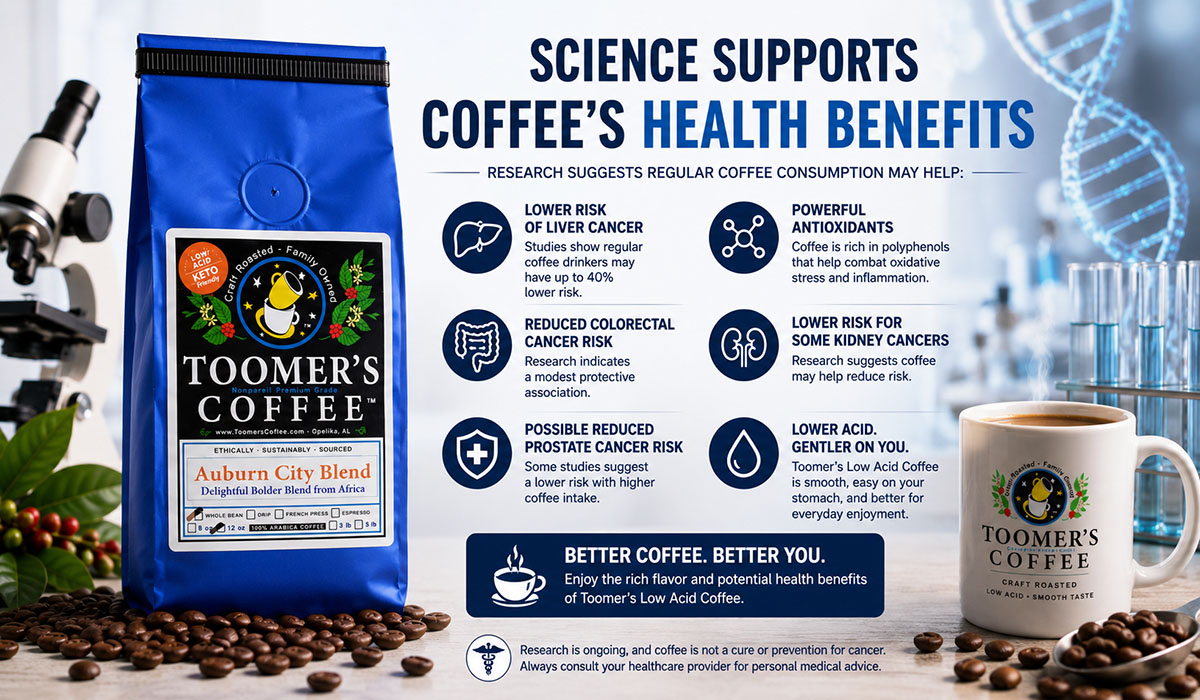
And while no single food or drink prevents cancer outright, a growing body of high‑quality research shows consistent, modestly protective associations between coffee consumption and several cancer outcomes. Below are nine evidence‑based ways coffee appears to help.


1) Strongest evidence — lower risk of liver cancer

Multiple large meta‑analyses and pooled studies report that higher coffee intake is associated with substantially lower risk of hepatocellular carcinoma (HCC). Dose‑response analyses suggest each additional cup per day is linked with a roughly 10–15% lower HCC risk, and habitual drinkers (2–5 cups/day) show even larger relative reductions. Proposed mechanisms include improved liver enzymes, reduced inflammation, and beneficial coffee phytochemicals.

2) Reduced risk of chronic liver disease (a major cancer pathway)

Beyond primary liver cancer, regular coffee drinking has been associated with lower rates of chronic liver disease and cirrhosis — conditions that strongly predispose to HCC. This suggests coffee may act upstream by protecting liver health over decades.

3) Lower colorectal cancer (CRC) risk in some studies
toomers coffee roasters shop with confidence buy toomer's low acid coffee ffor better flavorSeveral cohort studies and meta‑analyses find modest inverse associations between coffee and colorectal cancer, especially for colon (vs. rectal) cancer and in certain populations. Some studies report protective effects for both caffeinated and decaffeinated coffee, hinting at non‑caffeine compounds (polyphenols, diterpenes) as contributors.

4) Possible reduced prostate cancer risk and improved outcomes

Systematic reviews indicate higher coffee intake is generally associated with lower incidence of aggressive prostate cancer and with better outcomes in some analyses. Evidence varies by study design, but overall trends across multiple cohorts are supportive.

5) Small inverse associations for some female cancers (eg, endometrial, breast)

Meta‑analyses and pooled analyses suggest coffee may slightly lower endometrial cancer risk (likely via effects on insulin and estrogen metabolism) and may be neutral-to-protective for breast cancer, particularly in postmenopausal women — though effects are smaller and not uniformly reported.

6) Lower risk for some genitourinary cancers (kidney, bladder) in pooled data

A number of cohort meta‑analyses show a modest inverse association between coffee and renal (kidney) cancer; data on bladder cancer are mixed but do not support harm. These findings again point to antioxidant and anti‑inflammatory constituents in coffee.

7) Potential mechanisms: antioxidants, anti‑inflammatory, metabolic improvements

Coffee contains chlorogenic acids, cafestol, kahweol, and other polyphenols with antioxidant and anti‑inflammatory activity. Coffee is also associated with lower risk of type 2 diabetes and improved insulin sensitivity — metabolic changes that may reduce cancer risk for insulin‑sensitive tumors (eg, endometrial, colorectal).

8) Important caveat — smoking confounds some associations (especially lung cancer)

Some studies have reported a positive association between coffee and lung cancer, but these are almost certainly confounded by smoking (people who smoke often drink more coffee). Well‑adjusted analyses generally remove the apparent lung‑cancer signal. In short: coffee itself is unlikely to increase lung cancer risk; smoking remains the dominant driver.

9) Safety note — temperature matters more than coffee itself

In 2016 the IARC (World Health Organization’s cancer agency) concluded coffee per se is not classifiable as carcinogenic, but very hot beverages (>65°C / ~149°F) are “probably carcinogenic” for esophageal cancer. Drink your coffee at a sensible temperature. Otherwise, current evidence leans toward neutrality or modest protection for many cancer types.

10) Choose A High-Quality, Lower-Acid Coffee You Enjoy Every Day
toomers coffee roasters healthier coffee cand cancer reduction
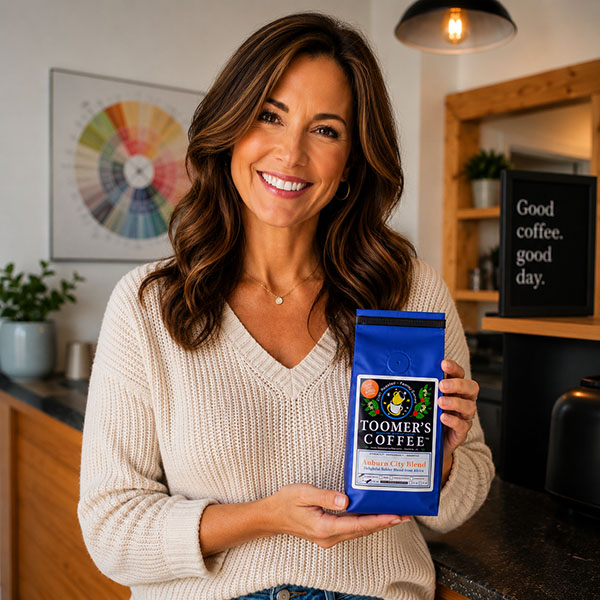
“I love my Toomer’s Coffee” Monica S.

If the research on coffee’s potential health benefits encourages you to make coffee part of your daily routine, the next step is simple: choose a high-quality coffee you’ll look forward to drinking every day. Consistency matters far more than chasing the latest health trend.

At Toomer’s Coffee Roasters, we’ve been producing premium specialty coffee since 2004 using our unique infrared roasting process, which creates a remarkably smooth cup that many customers find naturally lower in acidity than conventionally roasted coffees. While no coffee can prevent cancer or replace a healthy lifestyle, enjoying a flavorful, lower-acid coffee may make it easier to include moderate coffee consumption as part of an overall wellness-focused lifestyle.

If you’re looking for exceptional taste, premium specialty-grade beans, and a smooth, lower-acid cup, we invite you to discover the difference that Toomer’s Coffee can make.

toomers coffee roasters shop with confidence buy toomer's low acid coffee ffor better flavor


Bottom line (what readers and clinicians should know)

  • The strongest, most consistent protective association is for liver cancer and chronic liver disease.

  • For colorectal, prostate, renal, and some female cancers the evidence suggests modest protection, but results vary.

  • Most studies are observational (association, not definitive causation), though dose‑response patterns and plausible biological mechanisms strengthen the case.

  • Confounding factors (especially smoking) must be considered. Drinking very hot coffee may increase esophageal cancer risk; otherwise moderate coffee intake (1–4 cups/day) appears safe and often beneficial.

  • Coffee should be seen as one component of a healthy lifestyle (don’t substitute it for smoking cessation, healthy weight, vaccination, screening, and other proven prevention strategies).


References (selected, evidence‑based sources)

  1. Poole R, Kennedy OJ, Roderick P, Fallowfield JA, Hayes PC, Parkes J. Coffee consumption and health: umbrella review of meta‑analyses of multiple health outcomes. BMJ. 2017;359:j5024. https://www.bmj.com/content/359/bmj.j5024

  2. Bravi F, Bosetti C, Tavani A, et al. Coffee and hepatocellular carcinoma risk: a meta‑analysis. Hepatology. 2007; (and updated meta‑analyses). Example review: Kurozawa Y et al. 2016. https://pubmed.ncbi.nlm.nih.gov/23660416/

  3. European Journal of Cancer Prevention. Coffee and risk of hepatocellular carcinoma and chronic liver disease: systematic review and meta‑analysis of prospective studies. 2017. https://journals.lww.com/eurjcancerprev/fulltext/2017/09000/coffee_and_the_risk_of_hepatocellular_carcinoma.2.aspx

  4. Cui Y, Zheng Y, et al. Coffee consumption and risk of colorectal cancer: a systematic review and meta‑analysis. Nutrients / PubMed. 2019. https://pubmed.ncbi.nlm.nih.gov/30909640/

  5. Li Y, Zhang J, et al. Coffee consumption and colorectal cancer risk: meta‑analysis. Oncotarget. 2016. https://www.ncbi.nlm.nih.gov/pmc/articles/PMC4864536/

  6. Zhang X, Ugai T, et al. Coffee consumption and prostate cancer risk: systematic review and meta‑analysis. BMJ Open. 2021;11:e038902. https://bmjopen.bmj.com/content/11/2/e038902

  7. Health benefits review: Coffee Consumption and Cancer Risk: An Assessment of the Health Effects (review article). NCBI PMC. 2021. https://www.ncbi.nlm.nih.gov/pmc/articles/PMC8562048/

  8. Grosso G, Micek A, et al. Coffee consumption and breast cancer risk: dose‑response meta‑analysis. 2021. https://pubmed.ncbi.nlm.nih.gov/33832295/

  9. WCRF / AICR: Diet, Nutrition, Physical Activity and Liver Cancer (summary of evidence and dose‑response estimates). 2015/updates. https://www.wcrf.org/dietandcancer/liver-cancer/ (and related report PDF).

  10. Wang M, Hu K, et al. Coffee consumption and renal cancer: meta‑analysis. PMC 2021. https://www.ncbi.nlm.nih.gov/pmc/articles/PMC8738141/

  11. Coffee & Health (Scientific organization summary): Bladder, kidney and prostate cancers — overview and citations. https://www.coffeeandhealth.org/health/health-conditions/cancer/bladder-kidney-and-prostate-cancers

  12. Reviews on mechanisms (antioxidants, cafestol, kahweol, chlorogenic acids): Coffee Consumption and Cancer — PMC review. https://www.ncbi.nlm.nih.gov/pmc/articles/PMC9916720/

  13. Li X, et al. Coffee consumption and lung cancer: recent meta‑analyses highlight confounding by smoking. Scientific reports (2024) and commentary. https://www.nature.com/articles/s41598-024-62619-6

  14. JAMA / JAMA Oncology: Coffee Intake and Survival in Advanced or Metastatic Colorectal Cancer — examples of mixed findings and need for careful interpretation. https://jamanetwork.com/journals/jamaoncology/fullarticle/2770262

  15. IARC (WHO) Monographs Volume 116: Drinking coffee, mate, and very hot beverages — summary: coffee not classifiable as carcinogenic; very hot beverages probably carcinogenic. 2016. https://www.iarc.who.int/featured-news/media-centre-iarc-news-mono116/ and full monograph PDF: https://publications.iarc.who.int/_publications/media/download/5598/f49696e5e7a10f69ff3fc1cc673b3f77b4e8af43.pdf

U.S. Drinking Rate Hits Record Low as Coffee Becomes the Go-To Alternative

Why are so many people skipping cocktails and reaching for coffee instead?

New Gallup research shows U.S. alcohol use is at its lowest point since 1939 — and more Americans than ever see drinking as bad for their health. At the same time, specialty coffee, especially smooth low acid blends like those from Toomer’s Coffee Roasters, is becoming the go-to choice for people who want a healthier, more flavorful daily ritual.

toomers coffee roasters low acid coffee more popular that alcohol new gallup poll shows

Have you noticed how many people are skipping the after-work drink lately? You’re not imagining it. According to a brand-new Gallup poll, only 54% of U.S. adults now drink alcohol — that’s the lowest number since Gallup started asking the question back in 1939. Even more surprising? Over half of Americans now think that even “one or two drinks a day” is bad for your health.

That’s a big shift. And it’s especially true for younger adults. In the last two years alone, the percentage of 18–34-year-olds who drink has dropped by 9 points. Two-thirds of them say moderate drinking is harmful — which is almost double what it was in 2018. Clearly, people are rethinking their habits.

So… What’s replacing alcohol?

For a lot of people, the answer is simple: coffee. Not just any coffee, but really good coffee. Specialty coffee. Coffee you actually look forward to — the kind we roast here at Toomer’s Coffee Roasters.

Coffee still holds strong as America’s daily beverage ritual. The National Coffee Association says 66% of U.S. adults drink coffee every day, and a record 46% enjoyed specialty coffee just yesterday. That’s the highest it’s ever been.

https://www.toomerscoffee.com/wp-content/uploads/2025/08/slo-mo-espresso-shot-pull.mp4

Why Low Acid Coffee is Winning Hearts (and Stomachs)

Here’s where we’ve seen the biggest shift: people aren’t just drinking more coffee — they’re choosing coffee that’s better for them. That’s exactly why we focus on low acid, specialty-grade beans. Low acid coffee is gentler on your stomach and lets the true flavors of the bean shine through.

And we take it a step further with infrared roasting — a process that brings out rich, complex flavor without the bitterness or harsh aftertaste you sometimes get from traditional roasting. We’ve been doing this for 21 years, as a small, family-owned roaster, and we’ve seen firsthand how it can transform someone’s daily cup.

Coffee as the New Social Hour

The fun part? Coffee can be just as much of a social experience as grabbing drinks — without the hangover. Whether it’s an early morning pour-over at home, a latte with a friend, or a relaxed afternoon in your favorite café, coffee gives you that same sense of connection… just with a different buzz.

The Toomer’s Difference

  • toomers_coffee_roasters_logo_smallFamily Owned Since 2004 — 21 years of roasting and serving our community

  • Infrared Roasted — Precision heat for maximum smoothness and flavor

  • Low Acid Options — Perfect for sensitive stomachs

  • Specialty Grade Beans — From trusted farmers and microlot partners

The Bottom Line

As more people step away from alcohol, specialty coffee is stepping in. And not just as a caffeine fix — but as a healthier, more flavorful daily ritual. At Toomer’s Coffee Roasters, we’re here to make that cup something you truly look forward to.

So next time you’re skipping the drink menu, pour yourself something better. Check out a few of our top sellers below 👇

Product successfully added to your cart.View Cart
  • ←
    →
     Auburn City Blend Coffee - 12 oz.

    Auburn City Blend Coffee - 12 oz.

    $15.95
    Auburn City Blend has been our #1 Seller since 2004. From three different regions of Africa, this full bodied coffee is a favorite.

    toomers_coffee_estore_bold
    Select Options
    #1 SELLER!
    Auburn City Blend Coffee - 12 oz.
     Auburn City Blend Coffee - 12 oz.
     Auburn City Blend Coffee - 12 oz.
     Auburn City Blend Coffee - 12 oz.

    Auburn City Blend Coffee - 12 oz.

    $15.95
    Specialty House Blends, Coffees
    Auburn City Blend has been our #1 Seller since 2004. From three different regions of Africa, this full bodied coffee is a favorite.

    toomers_coffee_estore_bold
    Select Options

    Auburn City Blend Coffee - 12 oz.

    Specialty House Blends, Coffees
    $15.95
    Select Options
    Successfully Added to your Shopping Cart
    Adding to Cart...
  • ←
    →
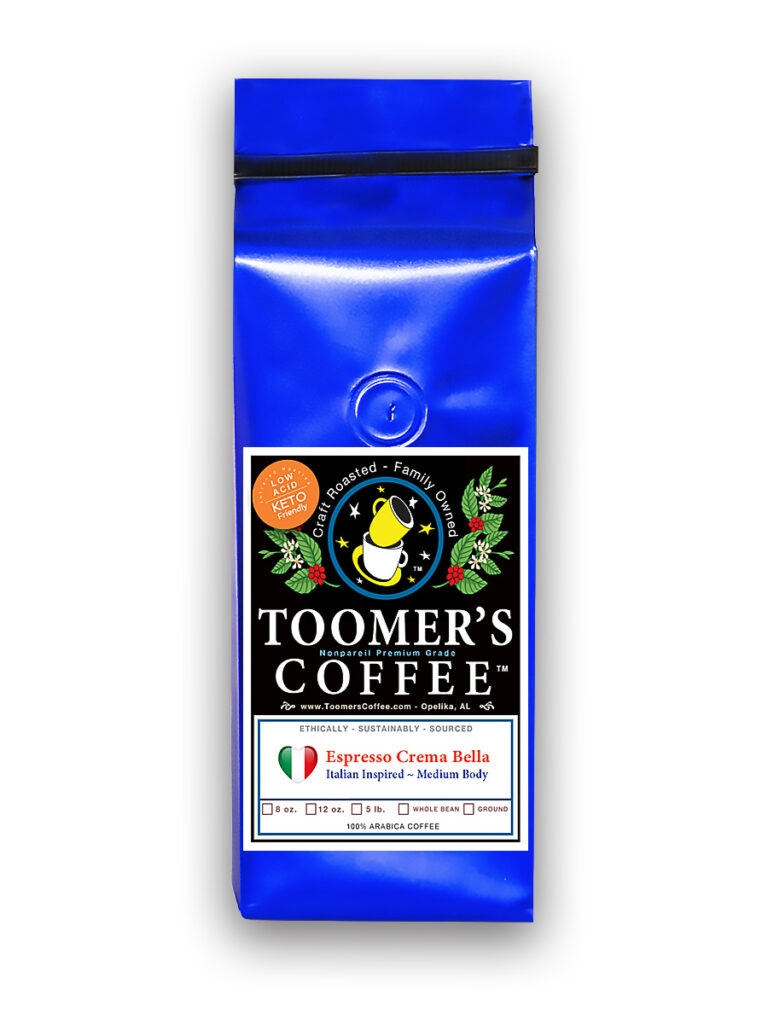
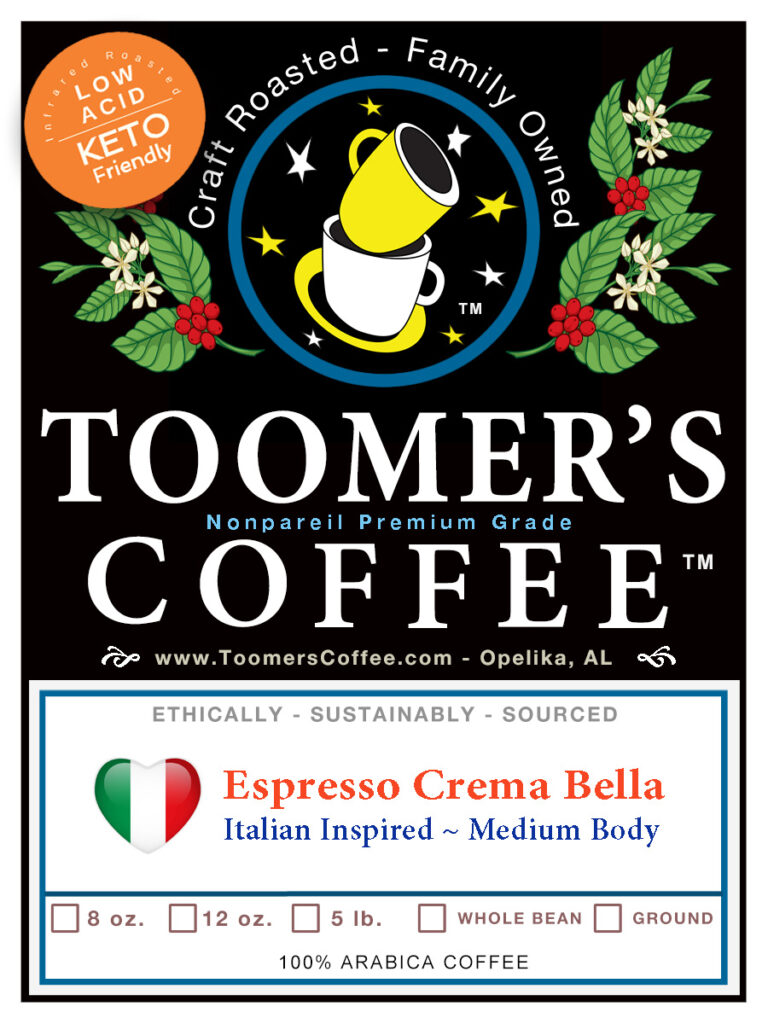
    Espresso Crema Bella 🇮🇹 Coffee - 12 oz.

    Espresso Crema Bella 🇮🇹 Coffee - 12 oz.

    $15.95
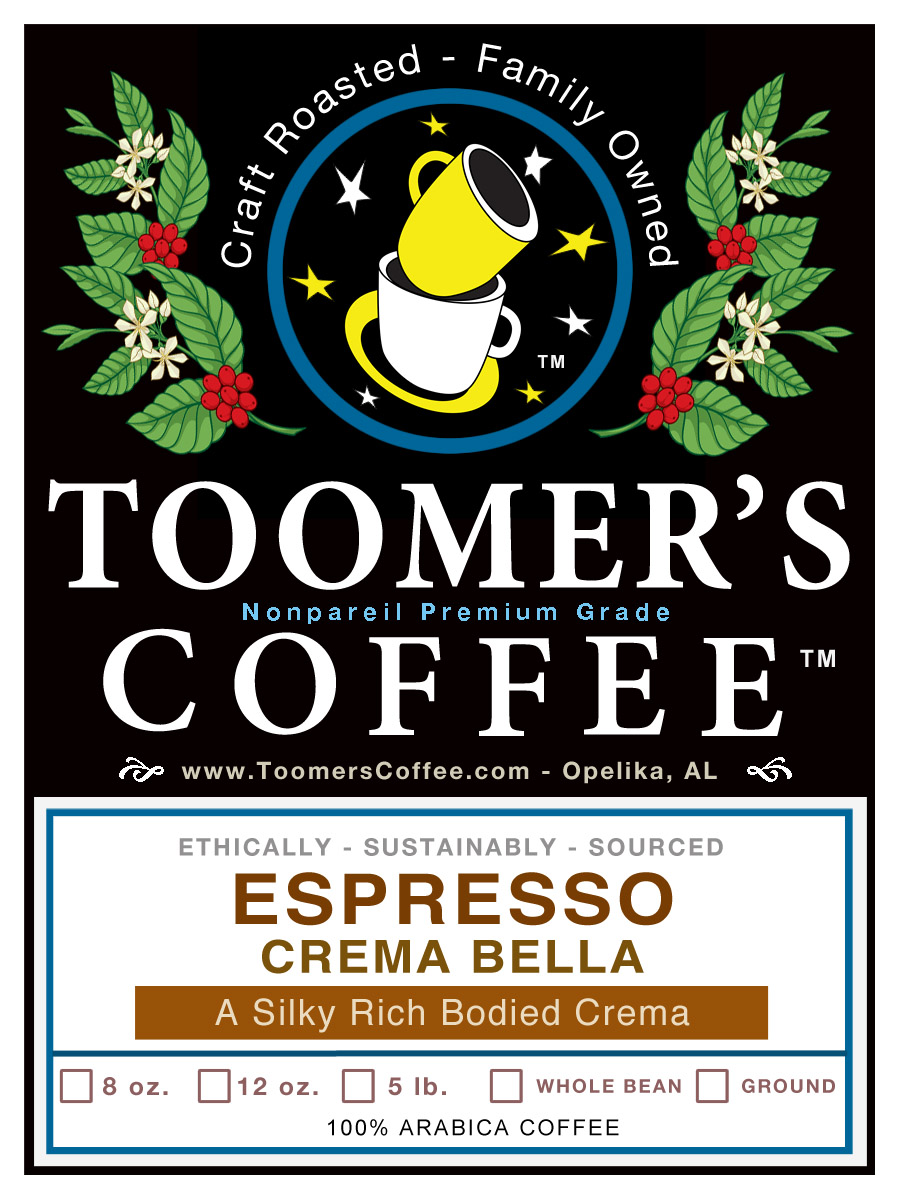
    Our NEWEST BLEND from Italy 🇮🇹! Trish and I visited a lot of coffee shops and roasters on a recent trip to Italy. There we found one espresso that had the wow-factor because of it's thick, silky, light brown crema on top. So we asked a lot of questions [in Italy] and then did our own research and came back and began playing with all of our coffees in different combinations for one year until we found just the perfect blend to generate our own version.
    ¡Salud and Eccellente!
    And now we present Espresso Crema Bella (Beautiful Crema) to you.

    Select Options
    MEDIUM ESPRESSO - POPULAR!!
    Espresso Crema Bella 🇮🇹 Coffee - 12 oz.
    Espresso Crema Bella 🇮🇹 Coffee - 12 oz.
    Espresso Crema Bella 🇮🇹 Coffee - 12 oz.
    Espresso Crema Bella 🇮🇹 Coffee - 12 oz.

    Espresso Crema Bella 🇮🇹 Coffee - 12 oz.

    $15.95
    Specialty House Blends, Coffees, Espresso Blends
    Our NEWEST BLEND from Italy 🇮🇹! Trish and I visited a lot of coffee shops and roasters on a recent trip to Italy. There we found one espresso that had the wow-factor because of it's thick, silky, light brown crema on top. So we asked a lot of questions [in Italy] and then did our own research and came back and began playing with all of our coffees in different combinations for one year until we found just the perfect blend to generate our own version.
    ¡Salud and Eccellente!
    And now we present Espresso Crema Bella (Beautiful Crema) to you.

    Select Options

    Espresso Crema Bella 🇮🇹 Coffee - 12 oz.

    Specialty House Blends, Coffees, Espresso Blends
    $15.95
    Select Options
    Successfully Added to your Shopping Cart
    Adding to Cart...
  • ←
    →
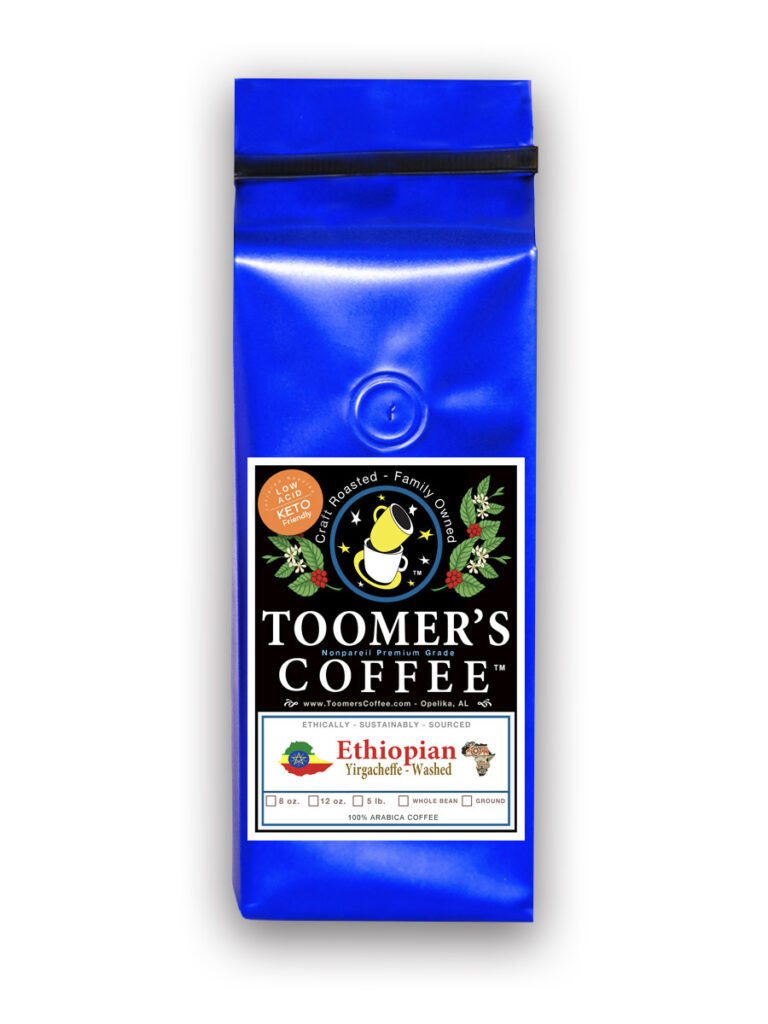
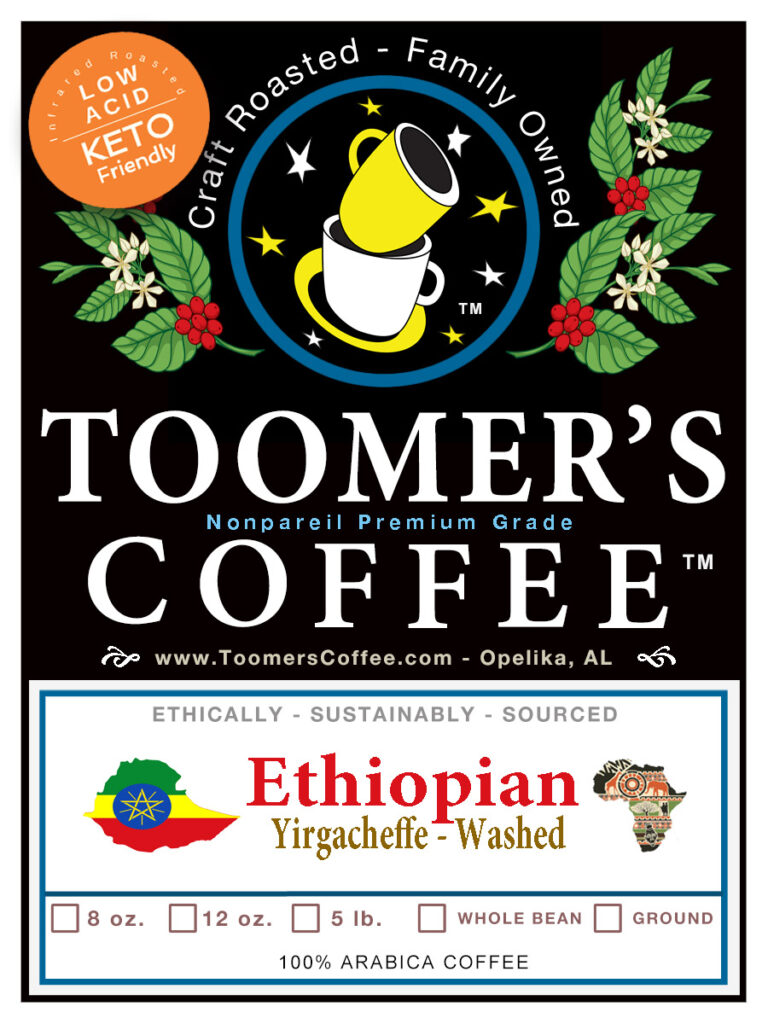
    Ethiopian Yirgacheffe - Washed

    Ethiopian Yirgacheffe - Washed

    $15.95
    Small-farm Yirgacheffe coffee from Ethiopia's Gedeo region. Crisp, floral, exotic cup. Specialty-grade, fresh-roasted. Shop African coffee now.
    OUT OF STOCK
    Newest Ethiopian!
    Ethiopian Yirgacheffe - Washed
    Ethiopian Yirgacheffe - Washed
    Ethiopian Yirgacheffe - Washed
    Ethiopian Yirgacheffe - Washed

    Ethiopian Yirgacheffe - Washed

    $15.95
    Coffees, African Coffees
    Small-farm Yirgacheffe coffee from Ethiopia's Gedeo region. Crisp, floral, exotic cup. Specialty-grade, fresh-roasted. Shop African coffee now.
    OUT OF STOCK

    Ethiopian Yirgacheffe - Washed

    Coffees, African Coffees
    $15.95
    OUT OF STOCK
    Successfully Added to your Shopping Cart
    Adding to Cart...

Coffee and Liver Health – What Does the Science Say

toomers coffee roasters coffee and liver health science says
Your morning cup might be your livers best friend according to the latest scientific evidence

Coffee and Liver Health: 8 Proven Ways Your Cup May Protect Against Liver Cancer and Damage According to Science

toomers coffee roasters low acid coffee and liver cancerCoffee isn’t just a morning pick-me-up — it’s a daily habit linked to better liver health in multiple large-scale studies. Among all beverages studied, coffee stands out as one of the most protective against liver cancer, chronic liver disease, and other liver-damaging conditions.

Here are eight, cited, evidence-based reasons your coffee habit could be helping your liver.


1) Lowers Hepatocellular Carcinoma (HCC) Risk

toomers coffee roasters espresso double shot or doble

HCC is the most common primary liver cancer. Meta-analyses show each extra cup of coffee per day can reduce HCC risk by 10–15%, with benefits seen in both caffeinated and decaf drinkers.

References: Bravi et al., Hepatology 2007; Kennedy et al., BMJ Open 2017


2) Slows Chronic Liver Disease Progression

People with hepatitis, alcoholic liver disease, or fatty liver who drink coffee regularly have lower fibrosis progression and cirrhosis rates, and a reduced risk of liver-related death.

References: Setiawan et al., Gastroenterology 2015; Saab et al., Clin Gastroenterol Hepatol 2014


3) Reduces Nonalcoholic Fatty Liver Disease (NAFLD) Risk

toomers coffee roasters low acid decaf flavoredHabitual coffee drinkers are less likely to develop NAFLD, and those who already have it tend to have milder disease. Coffee’s anti-inflammatory and insulin-sensitizing compounds may play a role.

References: Vitaglione et al., J Nutr 2020; Marventano et al., Nutrients 2016


4) Improves Liver Enzyme Levels

Elevated ALT and AST levels can signal liver injury. Coffee drinkers typically show lower liver enzymes, even when adjusting for alcohol intake, BMI, and other lifestyle factors.

References: Ruhl & Everhart, Gastroenterology 2005; Xiao et al., Hepatology 2014


Product successfully added to your cart.View Cart
  • ←
    →
    Costa Rican Tarrazu La Pastora  Coffee - 12 oz.

    Costa Rican Tarrazu La Pastora Coffee - 12 oz.

    $15.95
    This Costa Rican SHB La Pastora coffee is harvested from the Tarrazu region. Hints of caramel, chocolate and orange, and high flavor acidity component. This is a Medium Bodied coffee.

    Select Options
    ¡PURA VIDA!
    Costa Rican Tarrazu La Pastora Coffee - 12 oz.
    Costa Rican Tarrazu La Pastora  Coffee - 12 oz.
    Costa Rican Tarrazu La Pastora  Coffee - 12 oz.
    Costa Rican Tarrazu La Pastora  Coffee - 12 oz.

    Costa Rican Tarrazu La Pastora Coffee - 12 oz.

    $15.95
    Latin American Coffees, Coffees
    This Costa Rican SHB La Pastora coffee is harvested from the Tarrazu region. Hints of caramel, chocolate and orange, and high flavor acidity component. This is a Medium Bodied coffee.

    Select Options

    Costa Rican Tarrazu La Pastora Coffee - 12 oz.

    Latin American Coffees, Coffees
    $15.95
    Select Options
    Successfully Added to your Shopping Cart
    Adding to Cart...
  • ←
    →
    DECAF Brazil - Water Process - Coffee - 12 oz.

    DECAF Brazil - Water Process - Coffee - 12 oz.

    $17.95
    Our Water Process method is the innovative craft of using pure water to gently remove caffeine. This 100% chemical free process decaffeinates our Brazil Cerrado coffee in small batches.

    toomers_coffee_medium_body
    Select Options
    NON-FLAVORED DECAF
    DECAF Brazil - Water Process - Coffee - 12 oz.
    DECAF Brazil - Water Process - Coffee - 12 oz.
    DECAF Brazil - Water Process - Coffee - 12 oz.
    DECAF Brazil - Water Process - Coffee - 12 oz.

    DECAF Brazil - Water Process - Coffee - 12 oz.

    $17.95
    Regular Decaf
    Our Water Process method is the innovative craft of using pure water to gently remove caffeine. This 100% chemical free process decaffeinates our Brazil Cerrado coffee in small batches.

    toomers_coffee_medium_body
    Select Options

    DECAF Brazil - Water Process - Coffee - 12 oz.

    Regular Decaf
    $17.95
    Select Options
    Successfully Added to your Shopping Cart
    Adding to Cart...
  • ←
    →
    Guatemala Antigua Molino Coffee - 12 oz.

    Guatemala Antigua Molino Coffee - 12 oz.

    $15.95
    This high-grown (SHB) Antigua coffee is roasted medium body, usually early into the second crack stage. Guatemala Antigua has a full body of flavor that is heavier than other Central American coffees. With a spicy twinge, this unique Guatemalan coffee proves velvety-rich in texture and aftertaste.
    Select Options
    Guatemala Antigua Molino Coffee - 12 oz.
    Guatemala Antigua Molino Coffee - 12 oz.
    Guatemala Antigua Molino Coffee - 12 oz.
    Guatemala Antigua Molino Coffee - 12 oz.

    Guatemala Antigua Molino Coffee - 12 oz.

    $15.95
    Coffees, Latin American Coffees
    This high-grown (SHB) Antigua coffee is roasted medium body, usually early into the second crack stage. Guatemala Antigua has a full body of flavor that is heavier than other Central American coffees. With a spicy twinge, this unique Guatemalan coffee proves velvety-rich in texture and aftertaste.
    Select Options

    Guatemala Antigua Molino Coffee - 12 oz.

    Coffees, Latin American Coffees
    $15.95
    Select Options
    Successfully Added to your Shopping Cart
    Adding to Cart...


5) Rich in Anti-Fibrotic and Anti-Inflammatory Compounds

Chlorogenic acids, cafestol, and kahweol in coffee help reduce oxidative stress and inhibit processes that lead to scarring (fibrosis) in the liver.

References: Arauz et al., Nutrients 2017; Cavin et al., Food Chem Toxicol 2002


6) Benefits Apply to Both Caffeinated and Decaf

toomers coffee roasters low acid coffee auburn city blendStudies find similar liver protection in caffeinated and decaf coffee drinkers, making it an option for those sensitive to caffeine.

References: Bravi et al., Hepatology 2007; Freedman et al., N Engl J Med 2012


7) Cuts Risk of Death from Liver Disease

A large UK Biobank study found coffee drinkers had a 49% lower risk of death from chronic liver disease — with ground coffee showing the strongest association.

Reference: Kennedy et al., BMC Public Health 2021


8) Coffee Cleared by WHO as a Carcinogen Risk

In 2016, the IARC reviewed 1,000+ studies and concluded coffee is not a carcinogen — and may actually protect against liver and endometrial cancers.

Reference: IARC Monographs Volume 116, 2016


Practical Tips for Liver-Friendly Coffee Drinking

  • Moderate to high intake works best: Aim for 2–4 cups/day unless otherwise advised by your doctor.

  • Temperature matters: Avoid drinking coffee extremely hot (>65°C / 149°F) to reduce esophageal cancer risk.

  • Choose quality beans: Specialty-grade coffee retains more beneficial compounds.

  • Avoid excess sugar and syrups: These can counteract metabolic benefits.

Remember coffee is not an instant cure for liver disease but more of a preventative action you can take. There’s a saying that “An ounce of prevention is worth a pound of cure”.

Severe liver issues should always be monitored and treated by a qualified medical professional.

Bottoms up!


Product successfully added to your cart.View Cart
  • ←
    →
     Auburn City Blend Coffee - 12 oz.

    Auburn City Blend Coffee - 12 oz.

    $15.95
    Auburn City Blend has been our #1 Seller since 2004. From three different regions of Africa, this full bodied coffee is a favorite.

    toomers_coffee_estore_bold
    Select Options
    #1 SELLER!
    Auburn City Blend Coffee - 12 oz.
     Auburn City Blend Coffee - 12 oz.
     Auburn City Blend Coffee - 12 oz.
     Auburn City Blend Coffee - 12 oz.

    Auburn City Blend Coffee - 12 oz.

    $15.95
    Specialty House Blends, Coffees
    Auburn City Blend has been our #1 Seller since 2004. From three different regions of Africa, this full bodied coffee is a favorite.

    toomers_coffee_estore_bold
    Select Options

    Auburn City Blend Coffee - 12 oz.

    Specialty House Blends, Coffees
    $15.95
    Select Options
    Successfully Added to your Shopping Cart
    Adding to Cart...
  • ←
    →
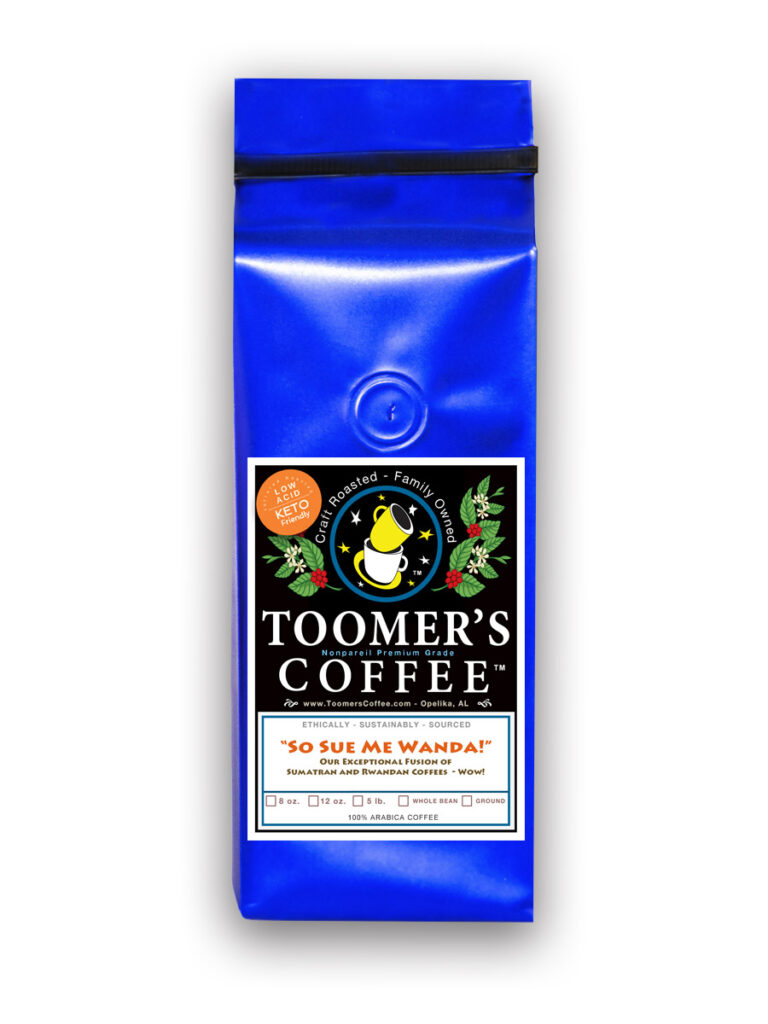
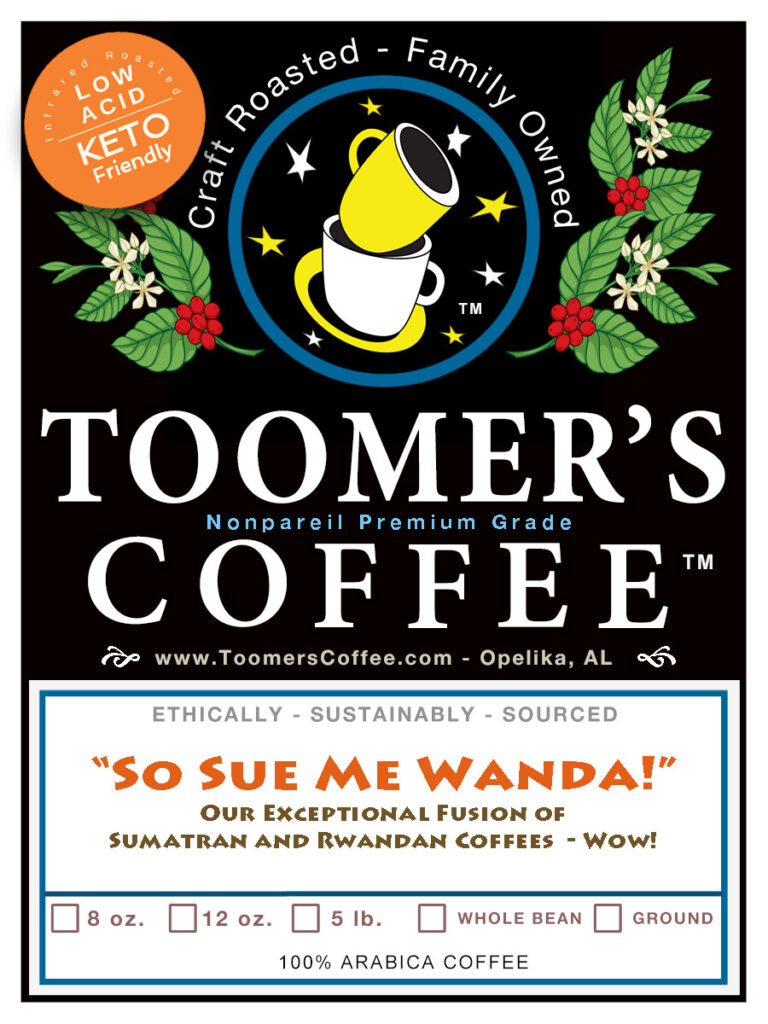
    "So Sue Me Wanda" - 12 oz.

    "So Sue Me Wanda" - 12 oz.

    $15.95
    Experience the fusion of Sumatran richness and Rwandan vibrancy in our newest blend. Robust Sumatran earthiness intertwines with Rwandan's fruity zest, creating a harmonious cup.


    Select Options
    NEWEST BLEND!/BOLD
    "So Sue Me Wanda" - 12 oz.
    "So Sue Me Wanda" - 12 oz.
    "So Sue Me Wanda" - 12 oz.
    "So Sue Me Wanda" - 12 oz.

    "So Sue Me Wanda" - 12 oz.

    $15.95
    Coffees, Specialty House Blends
    Experience the fusion of Sumatran richness and Rwandan vibrancy in our newest blend. Robust Sumatran earthiness intertwines with Rwandan's fruity zest, creating a harmonious cup.


    Select Options

    "So Sue Me Wanda" - 12 oz.

    Coffees, Specialty House Blends
    $15.95
    Select Options
    Successfully Added to your Shopping Cart
    Adding to Cart...
  • ←
    →
    Espresso Crema Bella 🇮🇹 Coffee - 12 oz.

    Espresso Crema Bella 🇮🇹 Coffee - 12 oz.

    $15.95
    Our NEWEST BLEND from Italy 🇮🇹! Trish and I visited a lot of coffee shops and roasters on a recent trip to Italy. There we found one espresso that had the wow-factor because of it's thick, silky, light brown crema on top. So we asked a lot of questions [in Italy] and then did our own research and came back and began playing with all of our coffees in different combinations for one year until we found just the perfect blend to generate our own version.
    ¡Salud and Eccellente!
    And now we present Espresso Crema Bella (Beautiful Crema) to you.

    Select Options
    MEDIUM ESPRESSO - POPULAR!!
    Espresso Crema Bella 🇮🇹 Coffee - 12 oz.
    Espresso Crema Bella 🇮🇹 Coffee - 12 oz.
    Espresso Crema Bella 🇮🇹 Coffee - 12 oz.
    Espresso Crema Bella 🇮🇹 Coffee - 12 oz.

    Espresso Crema Bella 🇮🇹 Coffee - 12 oz.

    $15.95
    Specialty House Blends, Coffees, Espresso Blends
    Our NEWEST BLEND from Italy 🇮🇹! Trish and I visited a lot of coffee shops and roasters on a recent trip to Italy. There we found one espresso that had the wow-factor because of it's thick, silky, light brown crema on top. So we asked a lot of questions [in Italy] and then did our own research and came back and began playing with all of our coffees in different combinations for one year until we found just the perfect blend to generate our own version.
    ¡Salud and Eccellente!
    And now we present Espresso Crema Bella (Beautiful Crema) to you.

    Select Options

    Espresso Crema Bella 🇮🇹 Coffee - 12 oz.

    Specialty House Blends, Coffees, Espresso Blends
    $15.95
    Select Options
    Successfully Added to your Shopping Cart
    Adding to Cart...


References

  1. Bravi F, Bosetti C, Tavani A, et al. Coffee drinking and hepatocellular carcinoma risk: a meta-analysis. Hepatology. 2007. https://pubmed.ncbi.nlm.nih.gov/17461492/

  2. Kennedy OJ, et al. Coffee consumption and liver cancer: a meta-analysis. BMJ Open. 2017. https://bmjopen.bmj.com/content/7/5/e013739

  3. Setiawan VW, et al. Coffee drinking and reduced risk of liver cancer: the Multiethnic Cohort Study. Gastroenterology. 2015. https://pubmed.ncbi.nlm.nih.gov/25777951/

  4. Saab S, et al. Coffee and tea intake and risk of advanced liver disease in the US population. Clin Gastroenterol Hepatol. 2014. https://pubmed.ncbi.nlm.nih.gov/24036073/

  5. Vitaglione P, et al. Coffee reduces liver steatosis in overweight subjects by modulating pathways of the gut–liver axis. J Nutr. 2020. https://pubmed.ncbi.nlm.nih.gov/32091586/

  6. Marventano S, et al. Coffee and tea consumption in relation to nonalcoholic fatty liver disease. Nutrients. 2016. https://pubmed.ncbi.nlm.nih.gov/27801878/

  7. Ruhl CE, Everhart JE. Coffee and caffeine consumption reduce the risk of elevated serum ALT activity in the United States. Gastroenterology. 2005. https://pubmed.ncbi.nlm.nih.gov/15825074/

  8. Xiao Q, et al. Coffee drinking and alcohol consumption in relation to liver enzymes. Hepatology. 2014. https://pubmed.ncbi.nlm.nih.gov/24585442/

  9. Arauz J, et al. Coffee and liver disease: an update. Nutrients. 2017. https://pubmed.ncbi.nlm.nih.gov/28257038/

  10. Cavin C, et al. Coffee diterpenes prevent hepatocarcinogenesis in rats. Food Chem Toxicol. 2002. https://pubmed.ncbi.nlm.nih.gov/11893426/

  11. Freedman ND, et al. Association of coffee drinking with total and cause-specific mortality. N Engl J Med. 2012. https://pubmed.ncbi.nlm.nih.gov/22646574/

  12. Kennedy OJ, et al. Association of coffee drinking with reduced risk of liver disease: UK Biobank study. BMC Public Health. 2021. https://bmcpublichealth.biomedcentral.com/articles/10.1186/s12889-021-10991-6

  13. IARC Monographs Volume 116. Drinking coffee, mate, and very hot beverages. WHO/IARC. 2016. https://www.iarc.who.int/featured-news/media-centre-iarc-news-mono116/

Top 3 Barista-Approved Tips for Better Espresso at Home

Pulling Shots in Slow Motion

Making espresso at home can be just as rewarding as visiting your favorite coffee shop...
if you know the right techniques

Shadow

“How do I make better espresso at home?”  Whether you’re a beginner or looking to improve your skills, these three essentials — grind, tamp, and time — will help you make better espresso at home every time.

We’ve honed these three basic skills to make better espresso drinks at home at Toomer’s Coffee and want to share them with you


1. Get the Espresso Grind Size Right

toomers coffee roasters get the espresso grind size right
You’re looking for a grind that produces a sandlike appearance; not too coarse (like drip coffee) or too fine (like Turkish coffee)

For espresso, grind size is crucial. Aim for a texture similar to fine sand — finer than drip coffee but not as powdery as Turkish coffee.

  • Too coarse: Water flows too fast, creating sour, under-extracted shots with little créma.

  • Too fine: Water flows too slowly, leading to bitter, over-extracted espresso.

Use a burr grinder for consistency, and make small adjustments until you hit the perfect “sweet spot” for flavor and flow.

2. Perfect Your Espresso Tamping Technique

toomers coffee roasters how to make better espresso at home pro tips
First: Get the correct Tamper sized for your Portafilter basket. Second: Practice applying 40 pounds of pressure in a gentle twist using a scale.

Even extraction starts with a proper tamp.

  • Skip the flimsy plastic tamper included with many home machines.

  • Invest in a heavy metal tamper sized in millimeters to fit your Portafilter. Unsure? Contact a trusted supplier like Espresso Parts for sizing help (it’s who we use). Their customer service professionals live and breath coffee!

  • Apply 40 pounds of pressure in a gentle twist — clockwise if right-handed, counter-clockwise if left-handed. Practice on a kitchen or postage scale until it becomes muscle memory. The key is get the feel and do it the same every time.

3. Time Your Espresso Shots

toomers coffee roasters timinig espresso shots to perfection 20to 25 seconds
The shot should pull completely between 20 to 25 seconds

A double shot of espresso should result in about 2-2.5 fluid oz and take about 20-25 seconds to extract. From pressing the start button to the last drop, pulling your shot should take 20–25 seconds. The pour should finish with the “coda di topo”  like in the image above — the thin, rat’s-tail stream of golden-brown espresso topped with créma.


toomers coffee roasters low acid coffee sandy trish toomers owners
Sandy & Trish Toomer – Owners of Toomer’s Coffee Roasters since 2004

So there you have in essence the condensed version of 21 years experience in our own coffee shops and the many we have helped start and continue to serve as customers across the USA! But the real key now is practice, practice, practice!

But in the end, it’s all about the coffee. So check out our espresso blend options below and give ’em a try. And of course, FREE SHIPPING is also available for all orders over $75.


Take Your Espresso to the Next Level with Our Signature Blends

toomerss_coffee_roasters_espresso_crema_bella
Order →

Why not try one of our highly regarded espresso blends for your next home shot?

Crema Bella – Our most popular espresso blend. Medium-bodied with smooth, balanced flavor, crafted from highly rated, high-mountain Latin American coffees.


toomers_coffee_roasters_espresso_bravo
Order →


Espresso Bravo – A bold, smokier option combining French Roast depth with the balance of medium-bodied City Roast beans.


toomers coffee free shipping logo
… on all orders over $80 (within the Continental US)

Truth About Mold in Coffee: The Science Backed Truth

toomers coffee roasters low acid coffee and mycotoxin free fad


At Toomer’s Coffee Roasters, all of our coffees are 3rd party tested because we know our customers care deeply about both the quality and safety of what’s in their cup. In recent years, certain coffee brands have begun marketing their products as “mycotoxin-free” or “third-party tested for mold toxins,” often raising more questions than answers…

…but here’s the truth

So—are mycotoxins a legitimate concern? Should you be seeking out “clean” coffee? And what do these buzzwords actually mean?

Let’s take a calm, evidence-based look at the facts to help you enjoy your coffee with confidence.


What Are Mycotoxins?

toomers coffee roasters low acid mycotoxin fad farmers

Mycotoxins are naturally occurring compounds produced by molds such as Aspergillus and Penicillium. These can develop in improperly stored crops like grains, nuts, and green (unroasted) coffee beans. In coffee, the most discussed mycotoxin is ochratoxin A (OTA).

Regulatory agencies including the FDA and European Food Safety Authority (EFSA) have studied OTA extensively and set safe consumption limits — far below any levels found in properly processed and roasted coffee.


Are Mycotoxins New or Caused by Chemicals?

No. Mycotoxins are not synthetic pesticides or modern agricultural additives — they’ve existed as long as farming has. They are a byproduct of nature when food is poorly stored in warm, humid conditions.

Thanks to better modern drying, storing, and roasting techniques, high-quality specialty coffees like ours at Toomer’s are extremely low-risk for mycotoxins.


Do Mycotoxins in Coffee Pose a Real Health Risk?

toomers coffee roasters low acid coffee and mycotoxin free fadNot realistically. Research has shown that an adult would need to consume over 7,000 cups of coffee per day at the legal maximum OTA level to approach harmful thresholds.

Roasting coffee beans destroys 70%–90% of any present OTA, and brewing dilutes it further. In fact, a 2020 EFSA study confirmed that most brewed coffee contains levels so low they are undetectable or far below safety limits.


So What Does “Third-Party Tested” Really Mean?

toomers coffee roasters low acid coffee mycotoxin fad testingGood question.

✅ Some companies hire private labs to test for mycotoxins.

🟡 But the FDA and USDA already regulate all imported coffee, and green beans are routinely tested or monitored for mold and contaminants.

So when a brand says “third-party tested”, it may imply more than it delivers — because virtually all coffee in the U.S. is already regulated and inspected by third parties through federal oversight.


So What About “Mycotoxin-Free” Coffee?

toomers coffee roasters low acid mycotoxin fad car salesman
“My mycotoxin free coffee is the best. Come on man, you can trust me”

The phrase or term “mycotoxin-free” isn’t regulated by the FDA, and in most cases it means the coffee tested below detectable limits, which is already the norm for any well-produced, properly roasted specialty coffee.

⭐️ In other words, “mycotoxin-free” is often a marketing term, not a health breakthrough.


How Toomer’s Ensures Safe, Low Acid Coffee — Without the Hype

toomers coffee roasters low acid mycotoxin hype

We take pride in serving a health-conscious community of coffee lovers — from intermittent fasters to keto and low-carb dieters — who value both flavor and integrity. Here’s how we make sure our coffee is safe and satisfying:

  • ✅ Specialty Grade Beans: Our beans are hand-selected, free from major defects, and grown by trusted farms with proper drying and storage.
  • 🔥 Infrared Roasting: Our unique roasting method ensures high, even heat that naturally destroys most mold toxins — without over-roasting or charring.

  • 🌿 Low-Acid Choices: Perfect for sensitive stomachs, our roasting and bean selection prioritize smooth, balanced coffee.

  • 🇺🇸 FDA & USDA Compliant: All our green coffee is imported and handled under U.S. regulatory safety standards.

We don’t rely on fear-based advertising. We just make great coffee — transparently and responsibly.


Should You Be Worried About Mycotoxins in Coffee?  Enjoy with Confidence

toomers coffee roasters low acid coffee peacfully drinking coffee without mycotoxin fear
Enjoy your Toomer’s Coffee. Fear is not in our coffee vocabulary 😎

Not if you’re drinking Toomer’s Coffee. The science, regulation, and roasting process are all on your side. You can sip your morning brew knowing that it’s:

  • 💧 Low acid

  • ☕ Properly roasted

  • 🧪 Within strict safety limits

  •  ✍️ Backed by facts, not fads

At Toomer’s, we believe coffee should be enjoyed—not feared. That’s why we’re committed to roasting with care, sourcing with integrity, and educating our customers with facts—not fads.


🔍 Sources Cited 

    1. Healthline
      “Mycotoxins Myth: The Truth About Mold in Coffee” Medically reviewed by Kim Rose-Francis RDN, CDCES, LD, Nutrition — Written by Kris Gunnars, BSc and Molly Burford — Updated on June 13, 2023
      https://www.healthline.com/nutrition/the-mycotoxins-in-coffee-myth

    2. U.S. Food and Drug Administration (FDA).
      “Guidance for Industry: Action Levels for Poisonous or Deleterious Substances in Human Food and Animal Feed.”
      FDA.gov

    3. European Food Safety Authority (EFSA).
      “Scientific Opinion on the Risks for Public Health Related to the Presence of Ochratoxin A in Food.” EFSA Journal, 2020.
      https://efsa.europa.eu

    4. International Agency for Research on Cancer (IARC).
      “Some Naturally Occurring Substances: Food Items and Constituents, Heterocyclic Aromatic Amines and Mycotoxins.” IARC Monographs on the Evaluation of Carcinogenic Risks to Humans, Volume 56, 1993.

    5. Varga, J. et al.
      “Ochratoxin A in Coffee, Cacao and Herbal Teas.” Food Additives & Contaminants, 2005.
      DOI: 10.1080/02652030500058567

    6. Taniwaki, M.H., et al.
      “Mycotoxins and Coffee.” In: Mycotoxins in Food, Feed and Bioweapons, Springer, 2010.
      DOI: 10.1007/978-3-642-00725-5_6

    7. Blanc, M. et al.
      “Effect of Roasting on Ochratoxin A Content in Coffee.” Journal of Agricultural and Food Chemistry, 1998.
      DOI: 10.1021/jf970751b

    8. Bennett, J.W., & Klich, M.
      “Mycotoxins.” Clinical Microbiology Reviews, 2003.
      DOI: 10.1128/CMR.16.3.497-516.2003

    9. Pittet, A.
      “Natural Occurrence of Mycotoxins in Foods and Feeds – An Updated Review.” Revue de Médecine Vétérinaire, 1998.


Which has more of a kick in the cup: Espresso or Brewed?

evolution of coffee culture header imageEspresso vs. Brewed Coffee: Which Packs More Punch? You Might Be Surprised

At Toomer’s Coffee, we get asked all the time: “Which has more caffeine—espresso or regular brewed coffee?”

The answer? They’re essentially about the same.  Really. Let’s break it down.

It’s Not About the Bean—It’s About a Brewing Method

ESPRESSO

toomers coffee roasters espresso double shot or doble
Espresso correctly refers a brewing method not a type of roast or bean

Many people mistakingly think espresso is a special bean or an ultra-dark roast. Not true.

The word “espresso” has its roots in the Italian verb “esprimere,” which means “to press out.” This verb stems from the Latin word “exprimere,” meaning “to press out” or “to squeeze out.” SO, espresso is simply a method of brewing—forcing hot water under pressure through finely ground coffee to create a rich, concentrated shot in about 20–25 seconds.

Because of its bold flavor and small portion size, espresso feels stronger. But one shot (about 1.5 oz) has roughly the same caffeine as an 8–12 oz cup of brewed coffee.

Yes—brew for brew, they’re basically equal in caffeine. It’s just that with espresso, you’re sipping it in a smaller, more intense package.

Meet the Difference: Our Low Acid, Infrared-Roasted Espressos: Bravo & Créma Bella

At Toomer’s, we craft Espresso Bravo and Espresso Créma Bella using our unique infrared roasting process—a cleaner, more even heat that produces smoother, lower-acid espresso with remarkable and many say, superior flavor clarity.

  • Espresso Bravo is bold, chocolatey, and well-structured—ideal for lattes and cappuccinos that need a little backbone.

  • Espresso Créma Bella is velvety, smooth, and sweet—perfect for solo sipping or those elegant flat whites.

Both are low acid, gentle on the stomach, and packed with full-bodied flavor.


But Don’t Count Out Our Brewed Favorites

Of course, not everyone is an espresso drinker. For many, brewed coffee is the daily ritual—especially our top sellers:

  • Auburn City Blend: A balanced medium-dark roast with warm, nutty tones and just enough brightness to keep things lively.

  • Breakfast Blend: Light, clean, and mellow—our smoothest morning starter, especially for those who prefer a gentler cup.

These favorites are also roasted with our infrared process, keeping acidity low and flavor consistent. Whether you brew them in a drip maker, French press, or pour-over, they deliver the comfort and familiarity you love—with none of the harshness.

The Real Difference? Flavor & Format

So should you go for espresso or a traditional brewed cup?

It really comes down to taste and format, not caffeine levels.

  • Like your coffee intense, rich, and fast? Go espresso.

  • Prefer sipping a full mug in the morning? Brewed blends like Auburn City or Breakfast Blend are perfect.

  • Want both? Add a shot of Espresso Bravo to your Auburn City Blend—a.k.a. a “Shot in the Dark.”

Need More Kick? Here’s How to Get It

  • Brewed Coffee: Want more caffeine? Don’t steep it longer—that’ll just make it bitter. Instead, use more coffee grounds.

  • Espresso Drinks: Just add more shots. A double or triple latte gives you the lift without bitterness.

  • Not a Big Coffee Fan? Try adding a shot to hot chocolate or chai. The flavor’s softer, but the boost is real.


Bottom Line: Brewed or Espresso, Low Acid Is the Way to Go

At Toomer’s Coffee, all our coffees—from Espresso Crema Bella to Breakfast Blend—are low acid, specialty grade, and roasted using our signature infrared process. That means more flavor, less bitterness, and a cup your stomach will thank you for.

So whether you’re team espresso or team brewed, you can drink confidently, knowing you’re starting your day with better coffee—inside and out.


  • Page 1
  • Page 2
  • Go to Next Page »
  • 🏠 Home
  • ☕ Shop Coffee & Gifts – Pickup or Ship
  • Toomer’s Coffee Subscriptions
  • Your Account

Copyright © 2026 · Toomer's Coffee Roasters – A Division of ST Enterprises, LLC ~ 1619 Thomason Drive, Suite B, Opelika, AL ~ 334-203-1010 · www.ToomersCoffee.com