Coffee: The new condiment!
September 11, 2009 by Roast Master  
Filed under Toomer's Coffee Blog

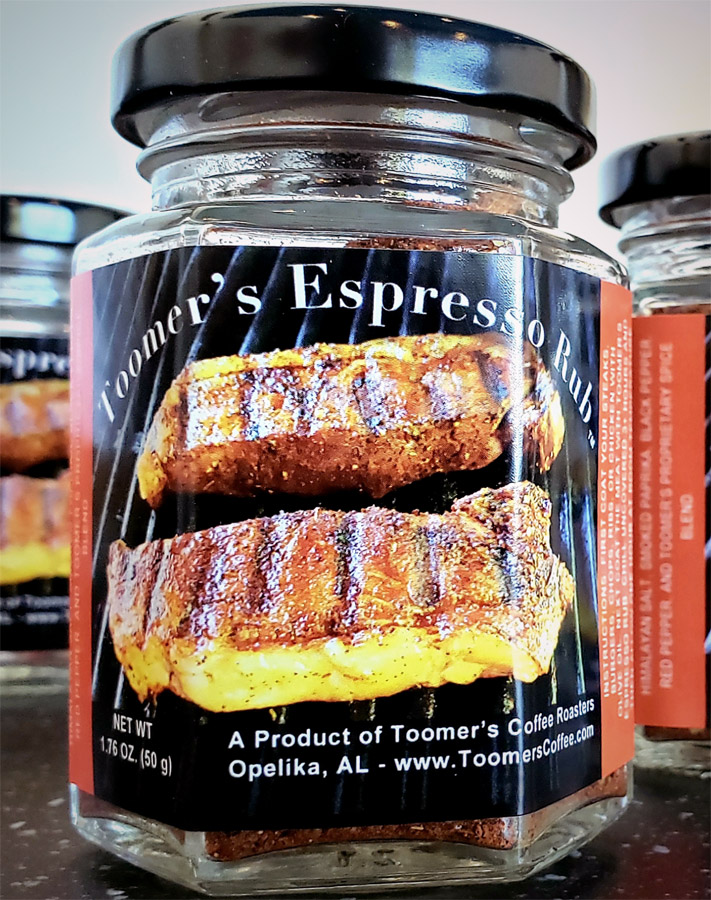
You can do more with coffee than just brew it.  Try adding it to your next rub!

You can do more with coffee than just brew it. Try adding it to your next rub!

Wanted to pass along this great article from the San Francisco Chronicle once again highlighting the incredible coffee bean!

Sandy
____________________________

By Marlene Sorosky Gray
SAN FRANCISCO CHRONICLE
Wednesday, July 29, 2009

When I was contemplating a culinary career many years ago, I took cooking classes at a small French restaurant near my home. The instructor, Chef Gregoire, did not believe in throwing anything away. Frugality, he said, was an important part of French cuisine.

He put every edible particle of food – vegetable peelings, scraps of meat, gravy, pancake batter and even leftover coffee – into a pot, covered the concoction with water and simmered it for hours.

If the resulting potage, which he affectionately called “garbage soup,” came out bland, he would throw in an extra cup of coffee.

“Coffee wakes up more than human beings,” he would say in his pronounced French accent. “It wakes up food as well.”

With the resurgence of comfort foods, chefs are braising more often and using coffee as part of the liquid.

“It adds another layer and depth of flavor,” says Mitchell Rosenthal, chef and co-owner of Town Hall in San Francisco, who adds a shot of espresso to a basic mushroom sauce in his pork osso bucco.

John Karbowski, executive chef at Pampas in Palo Alto, Calif., braises beef in a combination of stock and coffee to which he adds a little unsweetened cocoa powder.

He likes to pair coffee with flavors that complement it, like chocolate. To counteract the bitter coffee and cocoa notes, he cooks the beef with sweet vegetables, such as carrots, parsnips and onions.

How much to use

The amount of coffee to use in braising depends on how strong a flavor you want. There is no hard-and-fast rule.

Josiah Stone, chef-owner of Sent Sovi in Saratoga, Calif., recommends substituting strong coffee for half of the stock when braising heavy cuts of meat . Coffee’s aromatic components become integrated in the stock after simmering for several hours.

“The flavor of the coffee should not be discernible,” he says. “The goal of cooking with coffee is not necessarily to taste it, but to have it blend in and add another layer of flavor.”

Sauces and rubs

Coffee is so versatile that it is good for far more than just braising. It adds a jolt of flavor and a deep mahogany hue to barbecue sauces, marinades and rubs.

Steven Raichlen, author of “The Barbecue! Bible,” adds espresso to the brine for chicken breasts and, to complete the coffee motif, serves them with an espresso-flavored mustard barbecue sauce.

Dry rubs are a combination of spices, seasonings and herbs that add flavor and texture to meats and fish. When you add ground coffee to an ordinary rub, you take it to a whole new flavor level.

Pork tenderloin, a cut of meat that can be bland and dry, is the ideal candidate for an aromatic coffee rub. I was so enamored with the crust the rub imparted to the meat that for my next try I coated the pork with the seasonings and refrigerated it overnight.

The grilled meat was moist and succulent, and the seasonings permeated the entire roast. I basted and served it with a smoky, coffee-flavored barbecue sauce.

Coffee and dessert

Unlike combining coffee with savory food, a relatively recent development, coffee’s distinctive flavor has been part of desserts for centuries. When I asked pastry chefs about adding coffee to desserts, their first response was to combine it with chocolate to create a velvety mousse. The marriage of coffee and chocolate isn’t surprising when you consider that they grow in many of the same geographic regions and have similar floral and herbal notes.

Carol LeValley, proprietor of Rustic Bakery and Cafe in Larkspur, Calif., adds just enough coffee to her chocolate mousse to deepen the dessert’s flavor, but not enough to discern any coffee taste. She believes that coffee heightens the chocolate flavor.

Yet chocolate guru Alice Medrich, author of “Pure Dessert” and “Bittersweet,” has stopped adding coffee to chocolate desserts. “Chocolate has become so refined and complex that it overpowers the coffee,” she says.

The bottom line is, if you are using a complex, high-quality chocolate, you might not want to dilute it with coffee. If, however, you are using a semisweet or bittersweet chocolate that lacks floral, smoky and herbal notes, coffee can add just the boost you need.

Emily Luchetti, executive pastry chef at Farallon and Waterbar in San Francisco, uses coffee in ice cream, granita, angel food cake and a sumptuous cappuccino soufflé. One of her favorite recipes is a caramel coffee sauce in which she substitutes coffee for half the cream.

When I asked her what she puts it on, she laughingly answered, “Everything. It is so good, you can almost drink it.”

Tips for cooking with coffee

• Strong brewed coffee perks up the flavor in pot roasts, stews, chili, mole, baked beans and hearty soups.

• For fuller flavor, use ground coffee beans instead of instant. If you do use instant, make it espresso.

• When adding coffee to dishes that will be cooked, make the coffee stronger than you would normally drink it.

• To get the most coffee flavor in cookie dough, dissolve ground coffee in a small amount of liquid and add it to the creamed butter and sugar.

• To add coffee flavor to cakes, coarsely crush the beans with a rolling pin and steep them in the liquid used in the batter.

Coffee-Braised Pot Roast with Cinnamon and Ancho Chile Pepper

This recipe works equally well with lamb shoulder or shanks, short ribs and beef stew. If time permits, cook the roast ahead and refrigerate it and the cooked sauce separately. It is easier to carve the meat and remove the fat from the sauce when they are cold. Spoon the sauce over the meat and either refrigerate for up to 2 days or heat and serve. If desired, vegetables such as carrots, parsnips, rutabaga and potatoes can be added during the last 45 minutes of cooking. Serves 6.

4-lb. boneless chuck roast

For the rub

2 tsp. kosher salt

2 tsp. black pepper

2 Tbsp. ground or instant espresso

1 tsp. ground ancho chile pepper

1/2 tsp. ground cinnamon

For the braising liquid

4 Tbsp. olive oil

1 large onion, chopped

8 garlic cloves, minced

2 Tbsp. ground or instant espresso dissolved in 11/2 cups warm water

1 cinnamon stick

11/2 tsp. ground ancho chile pepper

1 Tbsp. packed brown sugar

1 Tbsp. butter, softened

2 Tbsp. flour

Preheat the oven to 325 degrees. Rinse the roast and dry thoroughly. Combine all rub ingredients in a small bowl and rub all over the meat.

In a Dutch oven or wide, heavy saucepan, heat 3 Tbsp. oil over medium high heat until hot. Add the roast and cook on all sides until very dark (coffee will cause it to become almost black), 8-10 minutes total. Remove the roast to a plate.

Add the chopped onion to the pan, reduce the heat to medium and cook, scraping up as much of the seasoning stuck to the bottom of the pan as possible, until the onion begins to soften, about 10 minutes. Add garlic and sauté for 1 minute. Slowly add a small amount of coffee to the pan (it will sizzle). Add the remaining coffee and cook, stirring up the remaining bits from the bottom of the pan. Stir in cinnamon stick, chile pepper and brown sugar. Bring to a simmer. Return the beef to the pan and bring to a boil. Cover tightly and transfer to the oven.

Bake for 11/2 hours, then turn the beef over, cover again and continue cooking until meat is fork-tender, but not falling apart, about 31/2 hours total. If making ahead, refrigerate meat and juices separately.

To serve, transfer the beef to a cutting board and tent loosely with foil. Remove the cinnamon stick from the braising liquid and skim the fat.

Bring the braising liquid to a boil over medium-high heat. Mash the butter with the flour to form a paste and whisk into the gravy. Simmer for 5 minutes, or until thickened slightly.

Carve the roast and serve with the gravy.

- Marlene Sorosky Gray

Which has more of a kick in the cup: espresso or brewed?

September 7, 2009 by Roast Master  
Filed under Toomer's Coffee Blog

Caffeine content.  The winner may surprise you!

Caffeine content winner: You'll be surprised!

Well this may surprise you.  Truth is neither actually wins.  They are about the same.  Let me explain.

The traditional American espresso based drinks, cappuccino or latte, are made from one to several “shots” of espresso and steamed milk.  One shot of espresso is approximately 1 1/2 ounces, two shots 3 ounces and so on.

Espresso is prepared by grinding beans to a finer consistency than for traditional brewed coffee.  The water is passed through the coffee rather quickly and under high pressure (20 seconds +/-) and the result is a bold, concentrated dose of coffee.  We call this espresso.

By the way, espresso is not a specific bean or roast level it is a method of making coffee.

Any bean or roasting level can be used to produce authentic espresso.  In Italy, the birth country of espresso, roast levels can vary quite a bit. In Southern Italy, a darker roast is often preferred, but the further north one goes in the country, the trend moves towards lighter roasts.

An espresso shot has about the same caffeine content as a cup of brewed coffee

An espresso shot has about the same caffeine content as a cup of brewed coffee

Brewed coffee on the other hand is made with much less coffee generally (as a ratio of dry coffee to finished beverage), more coarsely ground and then allowed to float in a bath of hot water (as in a paper filter basket type) then draining through a calibrated orifice (hole) in the bottom or in a percolator where water is continually passed over the coffee for several minutes.  The result generally is coffee with a distinctly milder body. Drip or percolator brewed coffee strength is varied by the amount of coffee used.

There are other ways to  process roasted coffee like a french press for example, but the point here is not process but end result.

Caffeine comparison chart (click to enlarge)

Caffeine comparison chart (click to enlarge)

Conclusions

Here it is: by the drink, a 12 ounce latte made with one shot of espresso has no more and possibly less caffeine that 12 ounces of brewed coffee.  Each shot of espresso adds approximately the equivalent caffeine of one 12 ounce cup of brewed coffee. Ounce for prepared ounce they are all about the same.

Our preferences for espresso based drinks, brewed coffee and even french pressed coffee should really be defined more by their unique characteristics of flavor and not misconceptions about caffeine potency.

In other words, a triple shot  latte will produce about the same results as three cups of regular brewed coffee.

“So how do I add  a little more kick to my coffee?”

-If you want more caffeine in your cup of brewed coffee or french press add more coffee not more time.  Remember this: steeping coffee longer, in a french press or percolator for example, will just make it bitter.

FYI, real hard-core-caffers often add shots of espresso to regular brewed coffee.  This is called a “Shot in the Dark”.

-In the case of espresso based drinks, add more shots.

“What if I don’t like coffee all that well but need a boost some mornings?”

One popular alternative is to add a shot of espresso to hot chocolate or to a chai tea.  The intense richness of these drinks masks a lot of the coffee flavor, still providing the caffeine.

Another popular alternative for energy seekers not wanting a lot of caffeine is white and green tea, both of whom have a component called ECGC (not available in black teas), which some studies show to increase metabolism and fat burning as well having other potential anti-oxidative effects.  This is largely unsupported through extensive scientific testing, but results so far are at least promising.

At Toomer’s coffee we serve a wide variety of loose teas which we brew by the cup.  Good stuff!

Catering Coffee Cambros from Toomers Coffee Roasters

July 15, 2009 by Roast Master  
Filed under cambros, catering

Let Toomer's Coffee make your party and event planning a little easier!

Let Toomer's Coffee make your party and event planning a little easier with one of our large Cambros!

One of our most popular catering services is our on site coffee delivery for larger  events, parties, meetings and even weddings.

We use a standard Cambro beverage container that will serve approximately 100-150 people per Cambro (see photo)

Over the past year we have provided coffee for large events for many local organizations and churches.  Some of those are the Mises Institute, Auburn Research Park, the Auburn Chamber of Commerce and the Auburn Fellowship of Christian Athletes.

Price includes delivery with options for set-ups (cups, creamer & sugar etc).

Call Toomer’s Coffee Company today and let us make your life and event planning a little easier!

Where do coffee beans come from?

July 9, 2009 by Roast Master  
Filed under Coffee 101

This is the first is a multi-part series on coffee to help educate our customers.

First, there are two types of coffee beans

Coffee beans come from two basic versins of coffee plants: either the Robusta ( aka Coffea robusta, or Coffea canephora) or Arabica (aka Coffea arabica) version.

At Toomer’s Coffee Roasters we do not roast or sell Robusta beans. I once asked our coffee broker how much Robusta they sell and she said less that 5% of their total volume is Robusta. While it is higher in caffeine content (the main reason I guess a dubious roaster might add it..to jack up the “vibrancy” of their blends), the overall taste issues and roasting peculiarities she said make it a less than desirable option.

Arabica beans on the other hand, while lower in caffeine content have a number of factors that make them the number #1 preference amongst 99% of roasters today, taste being the main factor.  But we will cover that in a later articel specifically on Arabica beans.

They start life as a fruit

cherries_small

Coffee beans start out "Cherries" (Click to enlarge)

Arabica beans are grown on low (3-6 feet) shrubby plants that bear white blossoms that produce the coffee fruit called “cherries” (about the size and color of cranberries).

These coffee cherries are clustered along the limbs of the plant ( See image).  The cherries are harvested from approximately October through January each year.  Since the coffee cherries do not ripen together, several pickings of the the same plant may be required until all of the cherries have been harvested at the peak of ripenness.

This is the first step in the chain of factors that seperates fair coffee from truly exceptional coffee: only picking the red cherries.  Mixing in under-ripe/ greenish cherries with red cherries will result in bitter coffee no matter how well it is roasted.

In our next article we will talk about the regions beans are grown in and how that affects flavor.

(It is suggested you subscribe to our RSS feed at the top to the page to get the latest from us!)

Toomer’s Coffee Roasters – Your wholesale coffee source

July 7, 2009 by Roast Master  
Filed under Why buy our coffee?

wholesale_christmas_bag1

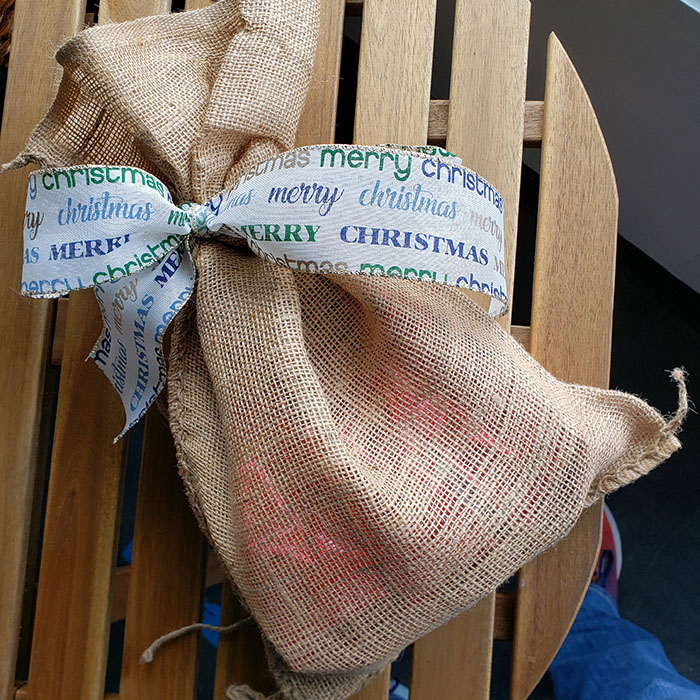
Here is an example of a custom Christmas Gift bag with our annual favorite Christmas Morning blend. We created this for a local business to give at Christmas.

Toomer’s Coffee Company is a local private roaster located in Lee County, with a reputation for satisfying the discerning palettes of regional coffee lovers.

If you are a coffee shop, church, hospital, gift shop, on-line gift retailer, or other business, you should be buying Toomer’s Coffee for a lot of reasons:

SUPPORT ALABAMA SMALL BUSINESS:  We are an Alabama based business.  We are also a Lee County business and the areas only coffee roaster.  We are also family owned.   In short… Shop Alabama, Shop Lee County……Shop locally!

QUALITY: Because we use only the finest Arabica beans from 11 countries around the globe and we roast our coffee weekly so you know you are always getting FRESH!

PRICE: For our wholesale customers in Southeast Alabama, we can meet or beat any..ANY..other coffee roaster in the Southeast.  Why?  We’re local which translates into no commercial shipping which save gas.  Go green…buy local.

WE HAVE A WORLD VIEW: We support practices of buying directly from coffee plantations thereby supporting local third world economies directly. Within the coming year will have establishedseveral links to particular farms in South America as well as Asia and the Pacific Rim. No, this isn’t Fair Trade.  We believe our approach is better.  We call it “Relationship Trade” where we are building relationships with our overseas green coffee suppliers.

So if you are looking for coffee of unrivaled quality yet reasonably priced for your shop, corporate gift giving, your office, church or as a product to enhance  your on-line presence, contact Toomer’s Coffee today!

Cornerstone United Methodist Church-Auburn, Alabama

cornerstone_outsidecornerstone_get_coffeeCornerstone United Methodist Church was Toomer’s Coffee very first commercial/wholesale customer in the Auburn/Opelika area.  This relationship began back in 2004.

Today we provide all of their coffee needs from day to day office coffee to their mid-week dinners and special events as well as their coffee service for Sunday mornings!

In addition we were able to provide a commercial Bunn Coffee maker from Toomer’s Coffee for brewing airpots.

Thanks Cornerstone!

AB&T Bank – Auburn, Alabama

fnblc_outside

The folks over at AB&T Bank in Auburn started using our coffee in 2007.

Since that time, they have purchased a Bunn Commercial Coffee Maker which now allows them to brew their coffee in Airpots. Go by AB&T Bank any day their lobby is open and enjoy a free cup of our coffee!fnblc_inside

Get to know Auburn’s Coffee Roaster

April 9, 2009 by Roast Master  
Filed under Our coffees

roasting_checking_beans

Roast Master, Sandy Toomer checks the progress of each roast step by step to perfection!

From the beginning we felt the only way we could keep our product consistent with our own expectations would be  by roasting our own coffee.  We like to think of ourselves as a coffee roaster first and a coffee shop second.  The shop is where we display our craft, much as first class art gallery is a show place for fine art.

That said here is a short FAQ about our coffee roasting operation:

What exactly do you mean by “custom roasted”?

Just that; we roast using customized roast profiles for each coffee depending on where it was grown, the altitude and process used to process the bean (i.e wet or dry process) .  Profiles are similar to recipes, except there is only one ingredient, high grade Arabica coffee beans.  The customization is the way each bean is roasted by varying several factors such as time, temperature, length of roast.

Where do you get your beans?

We primarily work through a coffee brokerage firm who imports coffee from all over the world for us.  They buy various grades from each country and we in turn choose which beans we buy based on their offering.

However this year we are working on several import arrangements with a number of small family, tribal and community coop coffee farms in Central America and the Asiatic region to purchase their coffees direct.  This is what we call Friendship Coffee.  Our goal is develop a personal relationship with our farms in these regions.

If all goes well, someday we hope to offer tours to visit these new friends!

Currently we are test roasting and cupping to validate sample batches of these coffees.

How do you roast coffee?

First, someone has to teach you.  It’s a craft. A craft is a passionate enterprise and we are passionate about good coffee.

Sandy was taught by Mr. Stephen Diedrich at Diedrich Manufacturing in Sandpoint, Idaho.  In the beginning Diedrich Coffee Roasters was a Southern, California icon of custom roasted coffee for decades (read more).  They built their own coffee roasters and eventually branched their coffee roaster manufacturing off as a separate enterprise. Hence, today we have Diedrich Manufacturing; considered the Rolls Royce of roasters.  We use a Diedrich 7 kilo IR Roaster.

Next, you buy the best green Arbica coffee beans.  We currently work through an acclaimed broker in New York and import coffees from:

Sumatra and Papua New Guinea (Indonesia)
Tanzania, Kenya ,and Ethiopia (Africa)
Mexico, Guatemala, Costa Rica, Columbia and Brazil (Central & So. America)
India

We also have our own house blends, such as top seller, our Auburn City Blend, Christmas Morning (seasonal), Harvest Morning (seasonal) and of course our proprietary Espresso Blend (for espresso based drinks).

In addition we offer a half dozen flavored coffees: Vermont Maple Nut, Snickeroo, Southern Pecan, Kahlua & Creme, Vanilla Butter Cream, and our own blend called Caribbean Cruise

Give us a try and you will taste the 14 day difference

The primary variation between our coffees and what you typically buy in the store has to do with the 14 day window.

When you roast coffee the heating initiates a chemical reaction that generally lasts for 14 days.  This is why so many coffees are packages with those valves you see.  Because for the first 14 days or so after roasting the coffee produces it’s trademark aroma.  Without the valve the bag would rupture.  After 14 days, that stops.

The trademark aromas range from chocolate, fruity, winy, floral notes, and so on.  Actually each coffee will normally produce a range of aromatic values in each cup.

You don’t get this in mass produced coffees.

We ship anywhere anywhere!

Want to share some of this unique taste from the “loveliest village on the plains”?  We are building our store slowly and have several of our favorite coffee on there.  However if youa re looking for another not listed, just call us.  We’re a family owned operation and thus you are dealing directly with the owners!

Call us today!  334-329-9852

French Roast

April 9, 2009 by Roast Master  
Filed under Our coffees

What is a French Roast anyway? It is a very dark roast. However not as far as an Italian Roast. In fact, many people mistakenly call Italian roast “Espresso Roast”, mainly because many Italian espresso bars use this roast.

Bottom line it is a dark roast, however that doesn’t have to mean bitter. People often are surprised that our French and Italian roasts, while full bodied, are not in the least bitter.