It’s a question nearly every coffee lover asks at some point: where do coffee beans actually come from?
At Toomer’s Coffee Roasters, we’ve been sourcing, roasting, and serving coffee since 2004. And we believe that understanding the journey your coffee takes — from fruit to cup — makes that morning brew even more meaningful.
Let’s walk through how coffee beans grow, the different types of beans, and why the origin of your coffee matters more than you might think.
Coffee Beans Are Actually Seeds

Coffee beans don’t start out looking anything like the roasted brown beans you scoop into your coffee maker. In fact, they begin life as seeds inside a small, red fruit called a coffee cherry.
These cherries grow on shrubby coffee plants, usually between three and six feet tall, which bloom with fragrant white flowers before bearing fruit. When ripe, the cherries turn a deep red — similar in size and color to a cranberry. Inside each cherry are usually two seeds. Those are your coffee beans.
This simple fruit sets the stage for everything that follows: how it’s harvested, processed, and roasted all play a role in the final flavor of your cup.
Arabica vs. Robusta: Two Very Different Beans
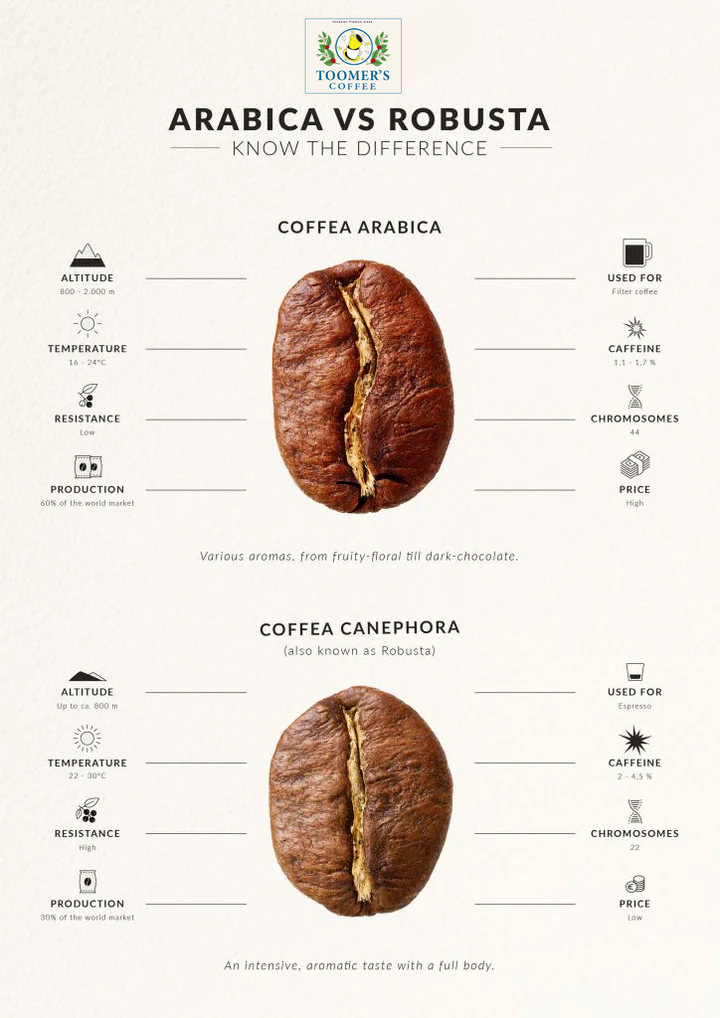
There are dozens of coffee species, but only two are commercially significant: Arabica (Coffea arabica) and Robusta (Coffea canephora).
We only roast 100% Arabica beans here at Toomer’s Coffee Roasters. There’s a good reason for that.
Arabica beans are grown at higher altitudes in cooler climates and are known for their smooth, complex flavor profile. They also contain less caffeine than Robusta — but more nuance and balance in the cup. Most specialty coffee roasters, ourselves included, prefer Arabica for its superior quality and flavor.
Robusta, on the other hand, is typically grown at lower elevations and is easier to cultivate. It has a harsher, more bitter taste and is often used in inexpensive blends or instant coffees. While it does contain more caffeine, it lacks the depth and brightness that define great coffee. Our broker once told us that less than 5% of their total volume is Robusta — which tells you how little interest high-quality roasters have in using it.
Where Coffee Grows — And Why That Matters
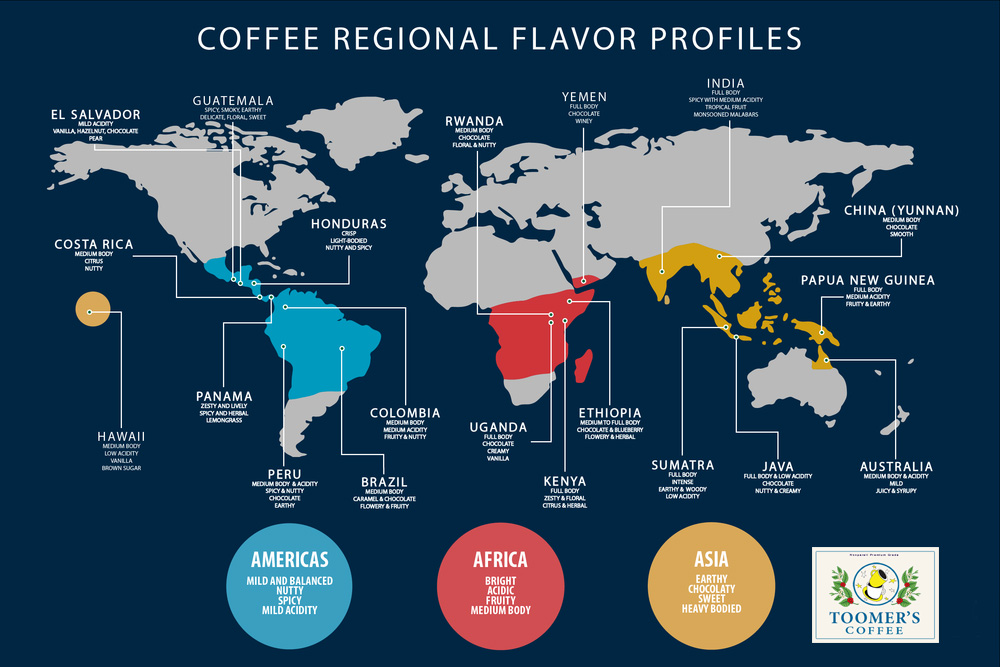
Coffee grows best in a specific region of the world known as the Bean Belt, a band around the equator stretching from Central and South America to Africa and Southeast Asia. The combination of climate, altitude, rainfall, and soil in these regions creates the perfect environment for growing coffee.
For example, Colombian coffees are known for their smooth body and balanced sweetness. Ethiopian beans often have bright, fruity notes. Honduran coffee can lean chocolatey and citrusy. Each growing region leaves a distinct imprint on the bean’s flavor, much like wine grapes reflect the terroir where they’re grown.
At Toomer’s, we source many of our coffees from family-run farms in Tanzania, Ethiopia, Colombia and Honduras. Many are what we call microlot coffees — small-batch, high-quality meticulously labored over harvests that offer unique flavor profiles you won’t find in mass-produced blends.
Harvesting Coffee: Quality Starts on the Branch

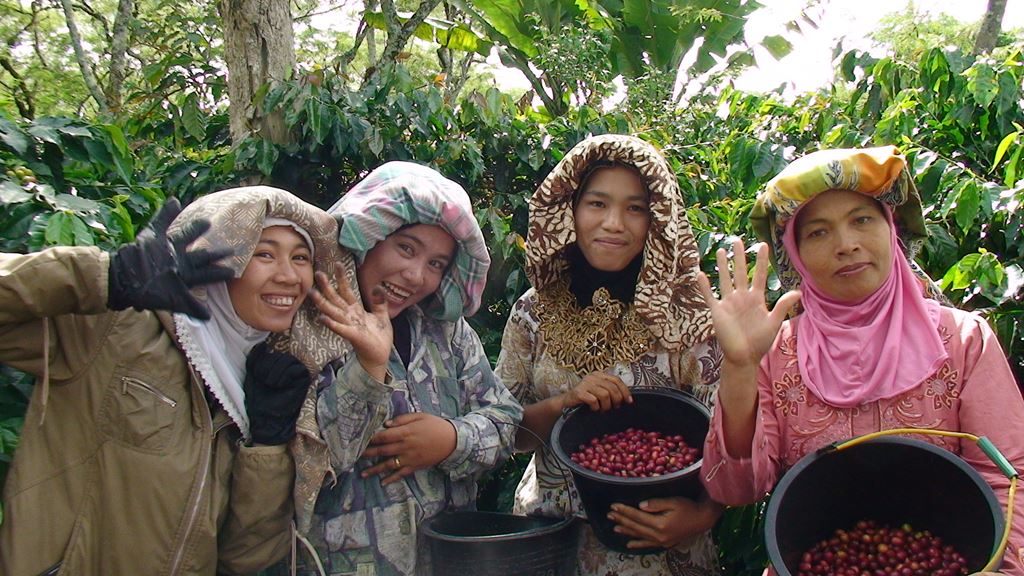
Coffee cherries don’t all ripen at the same time. On any given plant, some cherries will be bright red and ready to pick, while others remain green or partially ripe. That’s why the best farms harvest by hand — often returning to the same plant several times during the harvest season, which typically runs from October through January.
This careful, selective picking is one of the first signs of quality. If under-ripe cherries are mixed in, they can introduce harsh bitterness into the final cup — no matter how skillfully the beans are roasted. That’s why we work with farms that prioritize hand-picking and ripeness sorting at the source.
From Fruit to Bean: The Processing Stage
After harvesting, the coffee cherries need to be processed to remove the fruit’s outer layers and extract the beans inside. There are two main methods: washed (or wet) processing and natural (or dry) processing.
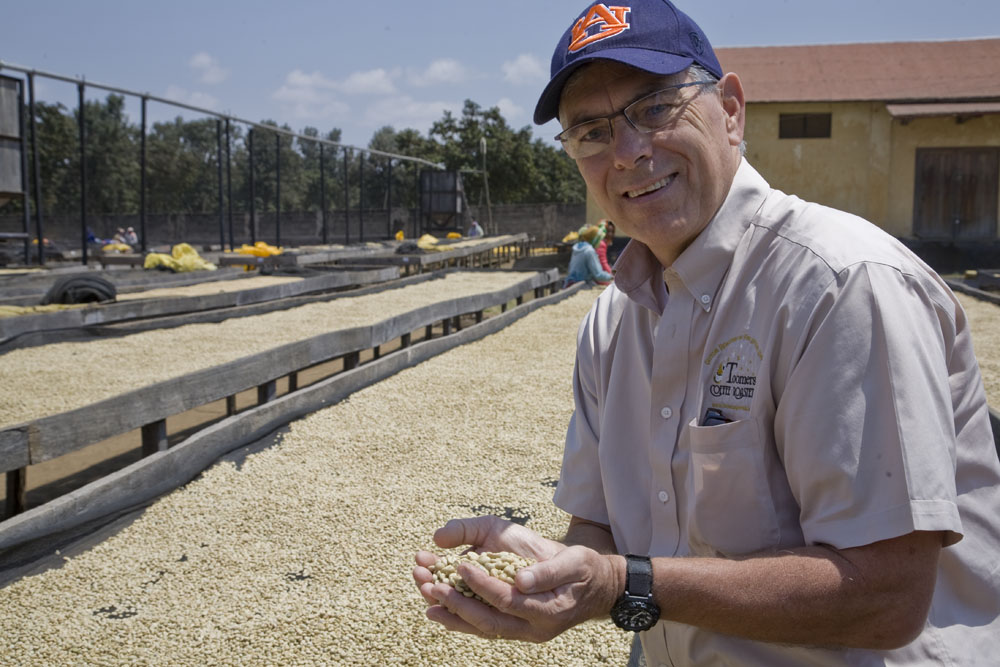
Washed coffees are fermented to remove the fruit pulp, resulting in a cleaner, brighter flavor. Naturally processed coffees are dried in the sun with the fruit still intact around the bean, which can lead to deeper, fruitier flavor notes.
At Toomer’s, many of our microlot offerings are sun-dried using natural processing. This method takes more time and care but allows each bean to fully develop its unique flavor characteristics.
Roasting: Where the Magic Happens
Once the beans are dried and milled, they’re ready to be roasted — the final transformation before coffee reaches your cup.
We use infrared roasting technology, a clean, smokeless method that applies radiant heat evenly across the surface of the bean. Unlike traditional drum roasting, infrared roasting avoids scorching and produces a more consistent, lower-acid coffee. This makes our coffee easier on the stomach and exceptionally smooth, without sacrificing depth or flavor.
Our roasting process is small-batch and precise, ensuring every origin expresses its best qualities.
Why Toomer’s Only Roasts Arabica Coffee
As a family-owned business and former missionaries, we believe in doing things with care, purpose, and integrity.
That’s why we only roast Arabica beans from trusted farms and regions known for producing exceptional coffee. It’s not just about better taste — it’s about a better story behind every bean.
We’ve partnered with growers who share our values, using sustainable methods and taking pride in every harvest. The result is a coffee that honors its origin, its farmers, and your cup.
Taste the Difference
Understanding where coffee beans come from reveals just how much craftsmanship, care, and tradition go into every cup. From mountain-grown cherries to the final roast, there’s a world of complexity behind your morning brew.
At Toomer’s Coffee Roasters, we’re proud to be a part of that journey. And we’d love for you to taste the difference.
If you’re ready to explore, check out:
-
Our Low Acid Coffees
-
The science behind Infrared Roasting
-
←→

Auburn City Blend Coffee - 12 oz.
$15.95Auburn City Blend has been our #1 Seller since 2004. From three different regions of Africa, this full bodied coffee is a favorite.
 #1 SELLER!
 -
←→

Espresso Bravo Coffee - 12 oz.
$15.95Toomer's Coffee original recipe Espresso Bravo Blend is a bold merge of Direct Trade Brazilian Cerrado, Rainforest Alliance Certified Costa Rican and SHB Colombian Supremo. The roast profile is a combination of City Roast, Full City, and French Roasts blended to our proprietary proportions.
Remember, Espresso is not a roast: It refers to the method of preparation, taken from the Italian, loosley transated, "Just for you". Actually you can use any roast when "pulling shots" of espresso. It's really a matter of personal preference. This is our original bolder blend from 2004. Check out our Espresso Crema Bella for a Medium Bodied option.
Cheers!
BOLDER ESPRESSO -
←→

Breakfast Blend Coffee - 12 oz.
$15.95This is our most popular proprietary Medium Bodied house blend. We combine Brazilian Cerrado and our Colombian Supremo SHB in a tweaked to perfection caramel and chocolate mouth feel.

-
←→
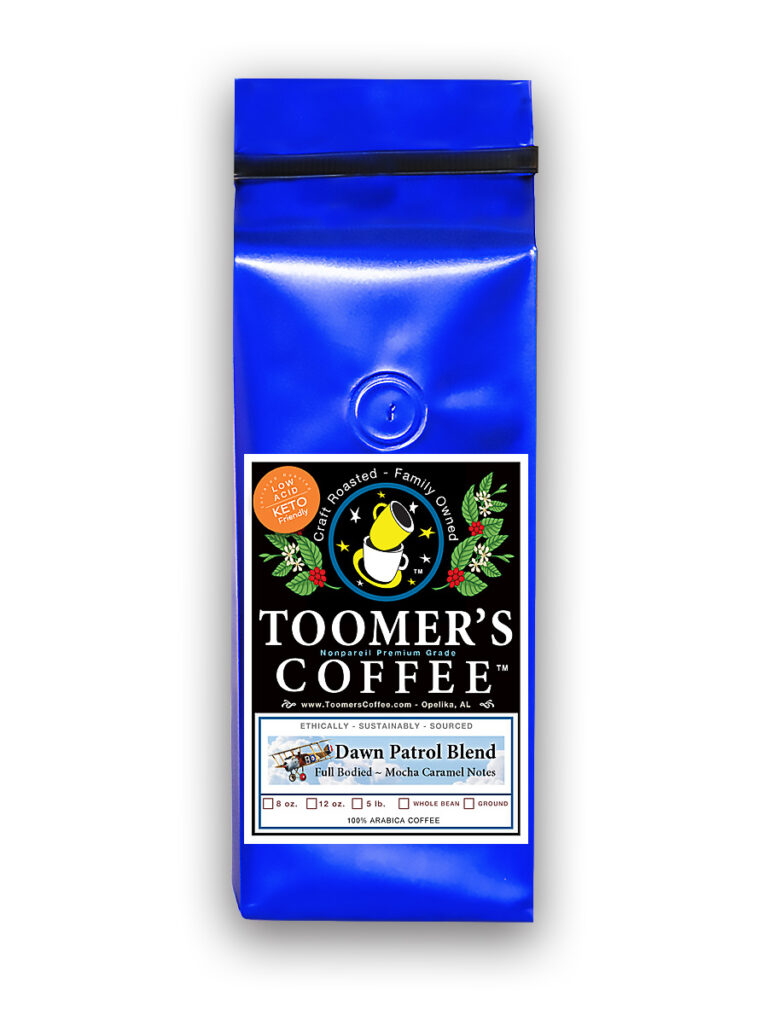
Dawn Patrol Blend Coffee - 12 oz.
$15.95Toomer's Coffee Roaster's Dawn Patrol is a great full bodied blend to start off your day before the day's adventures begin. Our proprietary blend of French Roast and City Roast Latin Arabica coffees with smooth chocolatey, caramel notes and great finish. Full bodied proprietary America's blend of French Roast and City Roast coffees with smooth chocolatey, caramel notes and great finish.
FRENCH ROAST BLEND -
←→

Cold Brew Blend Coffee - 12 oz.
$15.95The key to good cold brew is starting with good coffee and a great recipe. This Rainforest Alliance Certified, SHB (Strictly Hard Bean), high altitude grown blend is the result of lab testing this blend to perfection! (Hint: the critical key though is the infrared roasting process) We'll even send you our in-house fail-safe Cold Brew recipe along with your purchase! (Shipped pre-ground for cold brew)
LOWEST ACIDITY -
←→
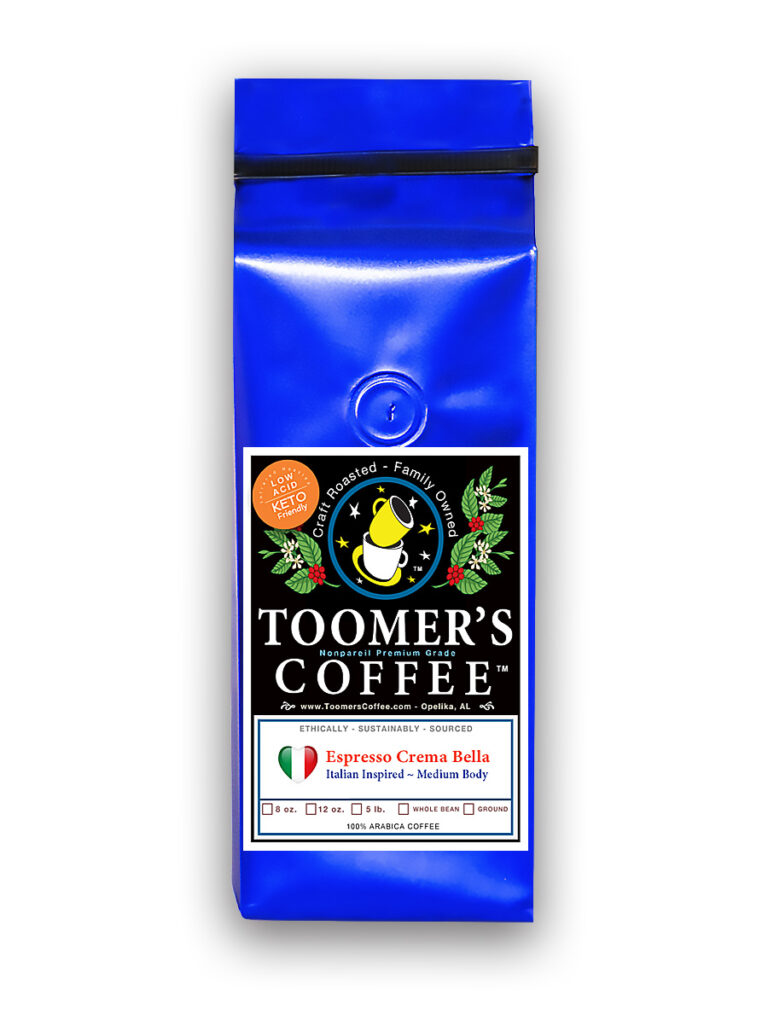
Espresso Crema Bella 🇮🇹 Coffee - 12 oz.
$15.95Our NEWEST BLEND from Italy 🇮🇹! Trish and I visited a lot of coffee shops and roasters on a recent trip to Italy. There we found one espresso that had the wow-factor because of it's thick, silky, light brown crema on top. So we asked a lot of questions [in Italy] and then did our own research and came back and began playing with all of our coffees in different combinations for one year until we found just the perfect blend to generate our own version.
¡Salud and Eccellente!
And now we present Espresso Crema Bella (Beautiful Crema) to you.
MEDIUM ESPRESSO - POPULAR!!Espresso Crema Bella 🇮🇹 Coffee - 12 oz.
$15.95Successfully Added to your Shopping CartAdding to Cart... -
←→
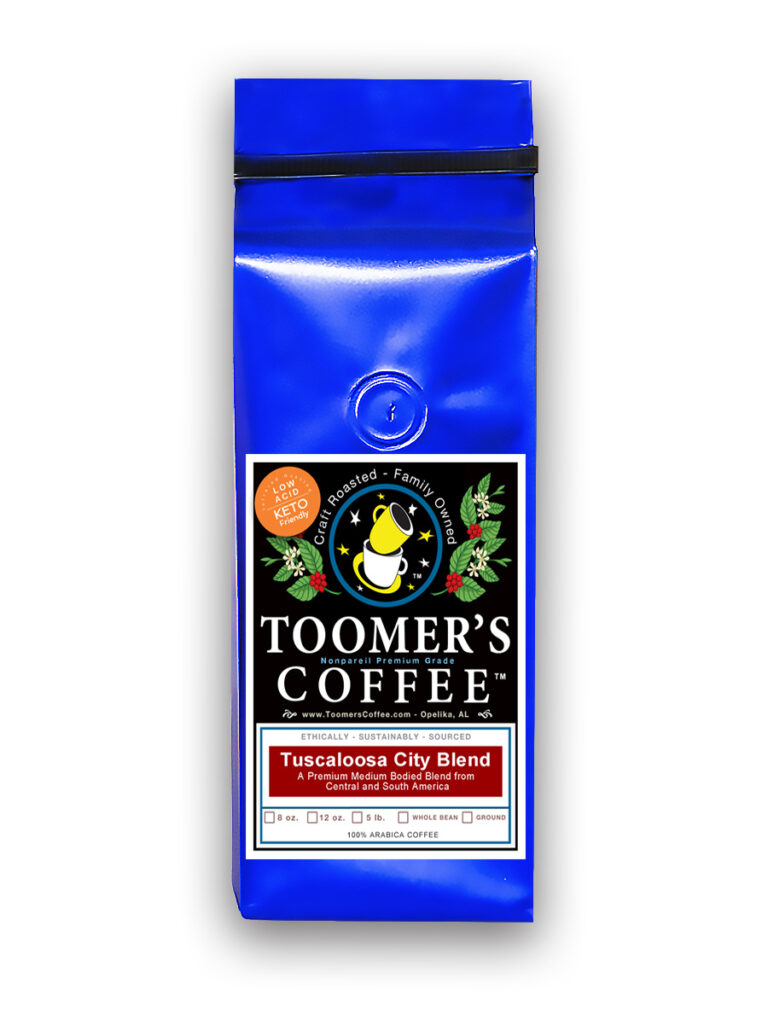
Tuscaloosa City Blend Coffee - 12 oz.
$15.95For the "House Divided" - We now offer our newest coffee family member, Tuscaloosa City Blend due to popular demand. This is yet another TCR Premium Blend from Central and South American Arabica coffee beans. Medium Bodied
🐘 FOR THE HOUSE DIVIDED 🐯Tuscaloosa City Blend Coffee - 12 oz.
$15.95Successfully Added to your Shopping CartAdding to Cart... -
←→
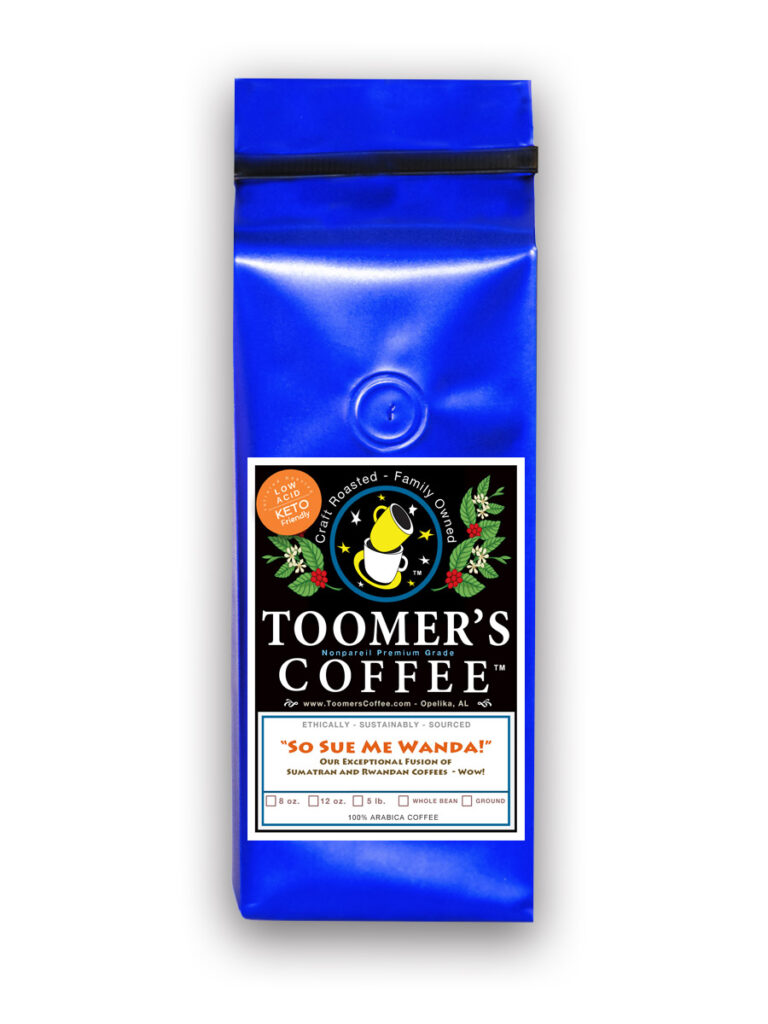
"So Sue Me Wanda" - 12 oz.
$15.95Experience the fusion of Sumatran richness and Rwandan vibrancy in our newest blend. Robust Sumatran earthiness intertwines with Rwandan's fruity zest, creating a harmonious cup.
NEWEST BLEND!/BOLD -
←→

Hoochee Coochee Blend - 12 oz.
$15.95Our newest proprietary blend is truly a "One-of-a-Kind Coffee Experience".
Get ready to dance with delight—Toomer’s Coffee Roasters proudly presents our newest masterpiece: Hoochee Coochee Blend. This bold, flavorful coffee is a proprietary blend of three world-class origins: Sumatra, Rwanda, and our Honduran Microlot Private Estate.OUR NEWEST BOLDER BLEND -
←→
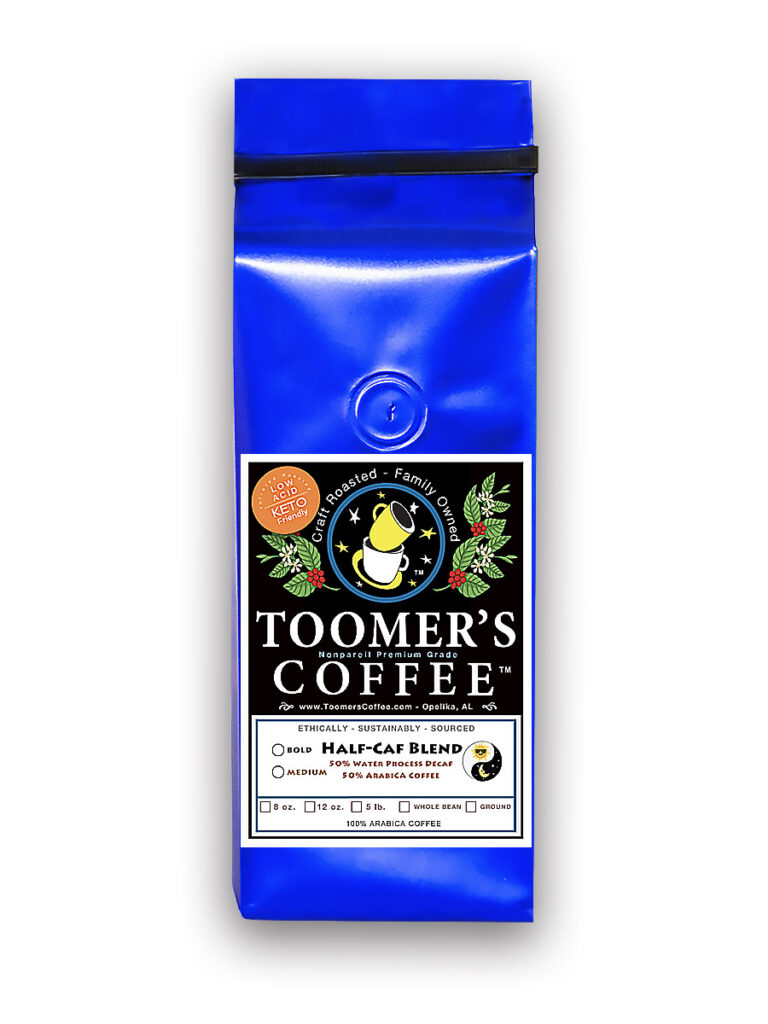
Half-Caf Blend Coffee - 12 oz.
$17.95Due to popular demand, we are now offering our own unique blends of Half BOLD or Half MEDIUM bodied coffee blended 50/50 with our great Swiss Water Processed Decaf®. Same great flavor with 50% LESS caffeine!
Choose your preference below: BOLD or MEDIUM bodied!ALL THE FLAVOR - HALF CAFF