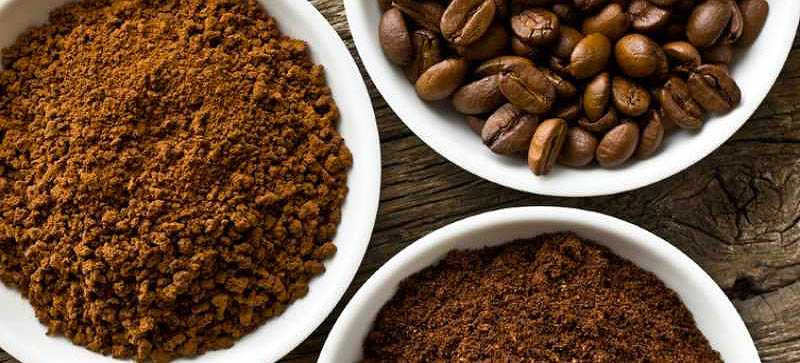
Burr grinders are the benchmark for brewing consistent coffee day after day in coffee shops and at home around the world and for good reason: they produce consistent granular coffee.
Conversely, blade grinders are essentially equivalent to “food processors” in so many kitchens. Put an onion in your food processor and run in for 10 seconds and you get nicely chopped onion for your pizza. Run the processor for 30 seconds and you get onion puree. Same thing happens in it’s own way with with blade grinders and coffee.
First you have to understand the differences and they aren’t subtle. Burr grinders and blade grinders are as different as night and day. The resulting coffee can be as well.
BURR GRINDERS
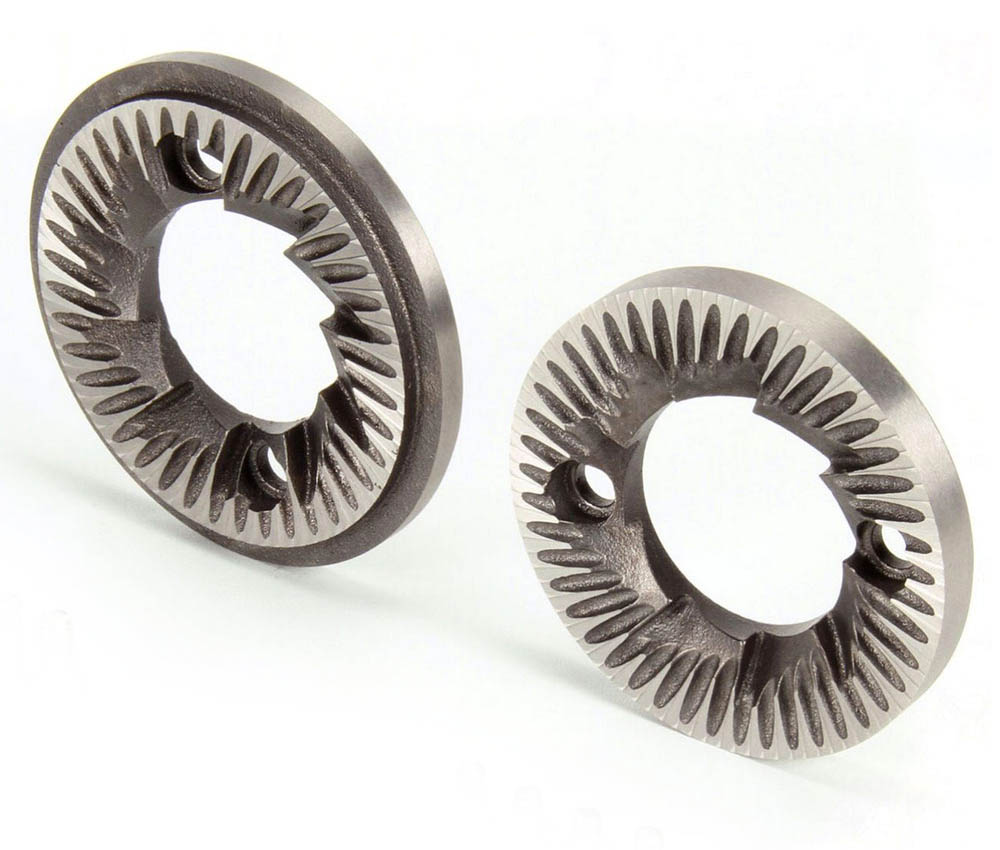
Burr grinders are just that…grinders or better said, coffee bean crushers. They come in two styles, flat and conical.
Examples of flat plate type would be professional Bunn G Series and a conical example would be the Bodum Bistro Burr Grinder. It’s also important to note here, and you may figure it out, that another example of the conical style grinder is your typical espresso grinders used in coffee shops, such as the Mazer Super Jolly unit.
How they work
Somewhat of a simplification but burr grinders have two plates, one stationary and one moving, with a graduated distance that is also adjustable. Set further apart you get a coarser grind, closer together ultimately you get a turkish and espresso (fine) grind.
The coffee enters through a center hole and the spinning/movable plate creates a movement where the coffee beans move outwards where the two plate’s distance gradually narrows. The closer that ending distance the finer the grind. The thing to remember is that this distance is mechanically maintained guaranteeing a consistent and uniform granularity of the given coffee grind after grind, day after day, pot of coffee after pot of coffee.
With the professional coffee shop grade Bunn G Series (flat plate) the amount of coffee is controlled simply by how much coffee you put in the hopper. You set the grind through a knob on the front to one of 6-8 options from French press to espresso grind. Just put a cup of whole coffee beans in the hopper up top and you get a cup of ground coffee out the stainless steel shoot.
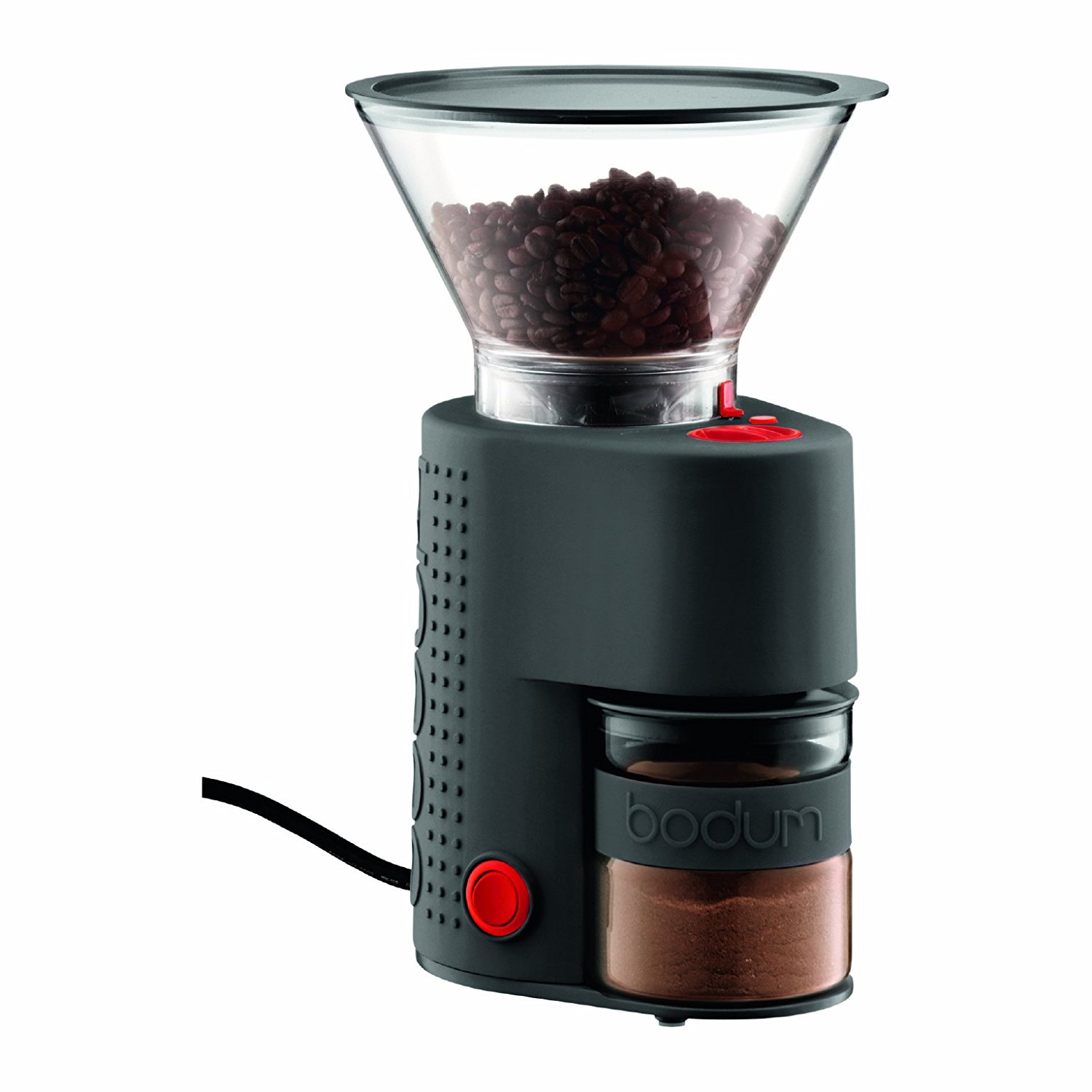
With consumer grade burr grinders, like the Bodum Bistro Series (conical plate), you set the grind by rotating the hopper (much like a pro espresso grinder) then rotate a separate timer dial from 0-30 seconds. At our house we use 16 seconds with the same grind setting for all coffees. If we want something a little stronger we up the time and leave the grind alone.
Of course we realize that to get a stronger brew YOU CAN choose to leave the time alone and adjust the grind to a finer setting. But from years experience in our own coffee shop and working with espresso grinders we prefer to leave the grind alone and adjust by time. We just feel it leads to a more consistent cup.
Also, remember that the time adjustment only controls the amount of coffee delivered to the grinding blades from the hopper and does not affect the granularity which is set by a separate twits of the hopper (much like a typical espresso grinder). So don’t be confused.
This also goes back to our early days with French Presses where the standard for increasing the strength of a cup is to use more coffee for a bolder but proper tasting cup versus letting it steep longer, which in that case leads to an over extracted cup which is bitter.
BLADE GRINDERS
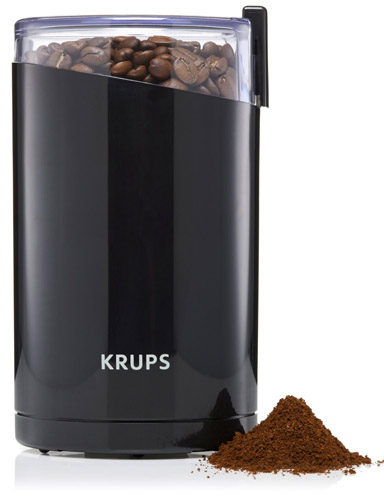
Blade grinders are kind of a misnomer, as they don’t really grind. As in my food processor analogy they are more coffee choppers.
The final granularity is controlled by several factors including the amount of coffee in the bowl and how long the blades move through the beans chopping them up. The more coffee the longer you need to let the blade do it’s thing and less coffee less time.
Here’s the catch though: how much time? Most blade grinders are manual, where you hold down a button to activate the blade. In short, 5 seconds too long and you get a finer grind, 5 seconds shorter and you get a coarser grind.
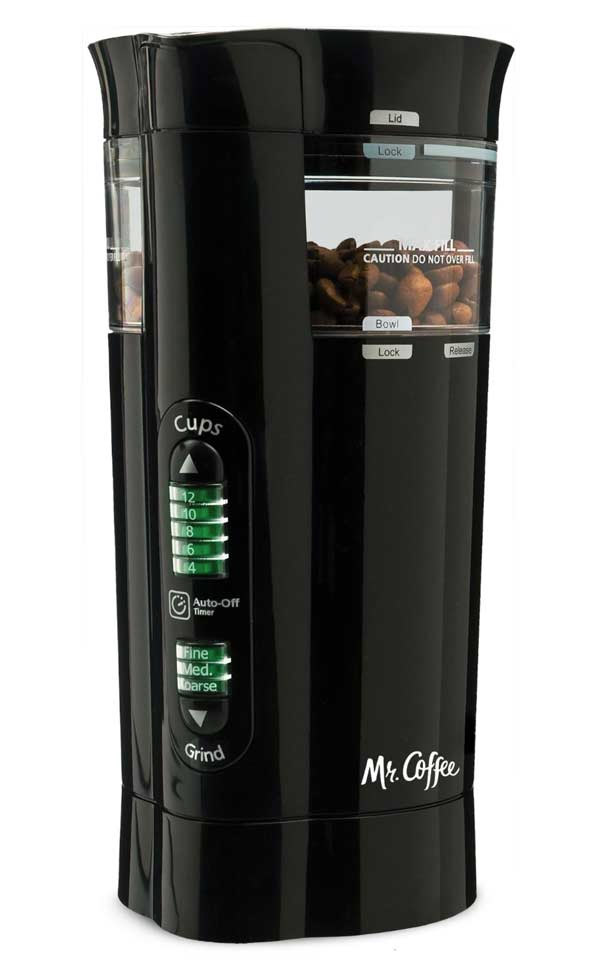
The biggest issue with blade grinders is that more often than not, people tend to over grind/chop-up their coffee beans. The result is too fine of a grind and using your usual measure, you often end up with an over-extracted brew due to the significant increase in surface area of the ground coffee.
If you must use a blade grinder I would recommend purchasing one with a timer. Play around and get the grind just right then NEVER change that timing. Hopefully you may get some sort of consistency with practice.
In the end, if money is a seriously limiting factor, the blade grinder like the Mr. Coffee timer version is about $12 at places like Walmart and online.
However, for about $75-100 you can own (in our opinion) and far superior kitchen appliance grade burr coffee grinder like the Bodum Bistro unit. It’s what we use at home and ours has lasted nearly ten years without a hitch. At our roastery will have several of the Bunn G Series as well.
NOTE: Don’t throw away your blade grinder if you upgrade to a burr grinder. They are great for grinding up dried seeds, nuts, etc. For instance we use ours for grinding up flax seeds for smoothies. Very important if you add them to smoothies by the way
I hope this helps. We just want you to have the best tasting Toomer’s Coffee and starting off with a proper grinder is key!